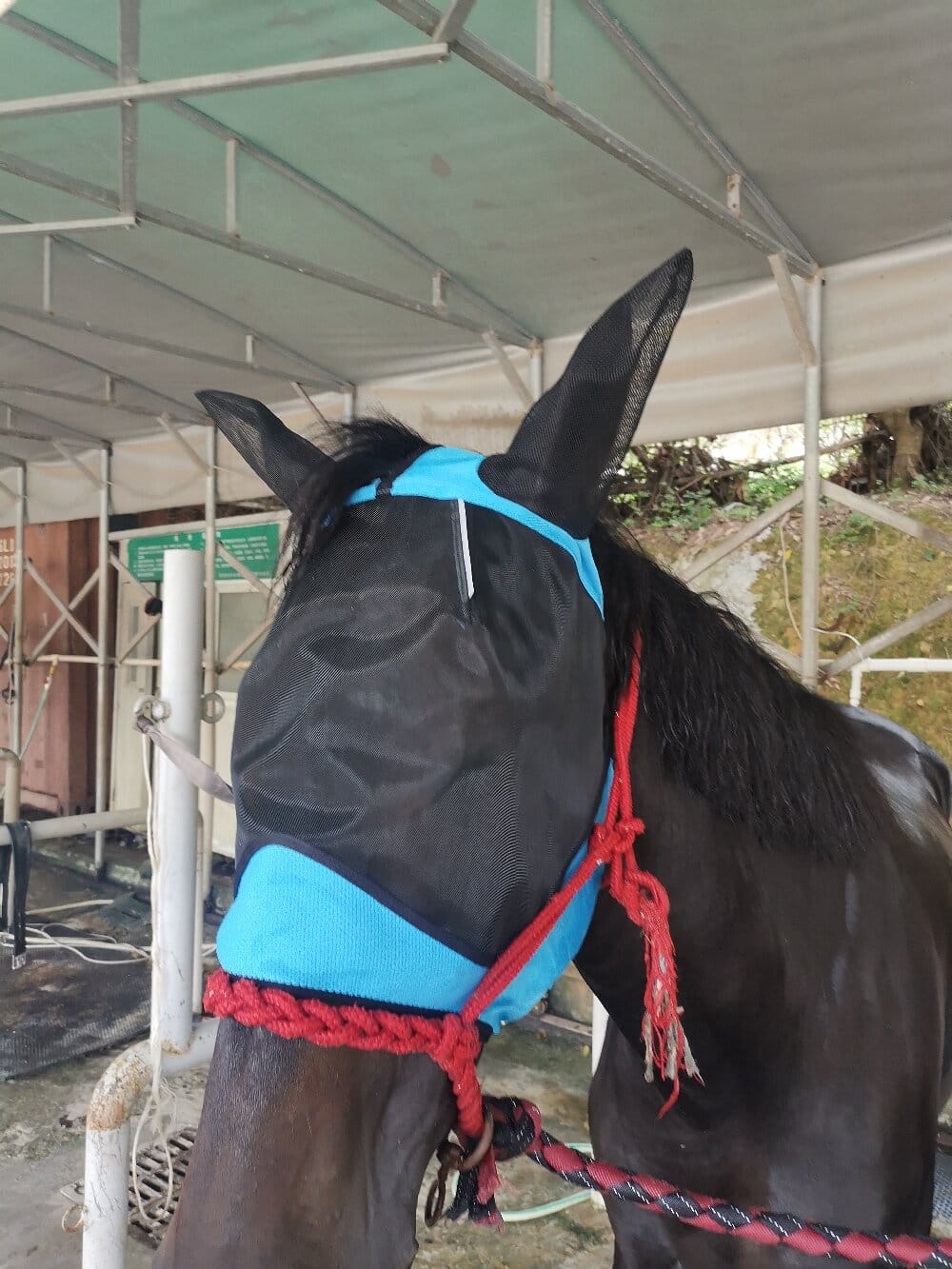
Last summer, I watched my gelding, Ranger, come in from turnout with his eyes swollen and irritated, and I knew I had to make a change. I had heard about the horse fly mask from barn friends for years, but I always dismissed it as unnecessary. That season changed my mind, and this case study is my honest account of what happened when I finally introduced one into our daily routine. If you are on the fence about whether a fly mask is worth the investment, I hope my experience gives you a practical, real-world perspective.
My Horse Fly Mask Case Study: The Problem With Summer Turnout
Ranger is a sensitive chestnut Thoroughbred who lives out 24/7 from May through September. Our barn sits near a creek, which means the fly pressure is intense. Before the mask, I was applying fly spray twice a day, smearing ointment around his eyes, and still finding him head-shaking and stomping by mid-afternoon. The constant irritation was affecting his grazing time and, frankly, his attitude under saddle.
I documented a two-week baseline before making any changes. The results were eye-opening:
- Daily head-shaking episodes: roughly 8 to 10 per hour during peak fly activity
- Visible eye discharge and swelling: present most mornings
- Fly spray cost: about $40 per month
- Time spent re-applying repellent: 30 to 45 minutes daily
Choosing the Right Fly Mask for My Horse
Not all masks are created equal, and that was my first lesson. I tried three styles over the summer and learned what actually matters:
- Fit and adjustability: A mask with fleece trim and adjustable hook-and-loop straps stayed put without rubbing.
- UV protection: A breathable mesh with UV-blocking fabric helped with sun sensitivity, which surprised me.
- Ear coverage: The first mask I bought lacked ear protection, and Ranger still tossed his head constantly. The version with ear covers made a noticeable difference.
- Visibility: A lighter-colored mesh kept him cooler and made it easier for barn staff to spot him in the pasture.
I settled on a well-fitted mask with ear coverage and soft binding, and I introduced it gradually over three days using positive reinforcement. Ranger accepted it within a week, which I credit to the slow introduction and the immediate relief it provided.
The Results: What Changed After Two Months
By the end of July, the difference was measurable. Head-shaking dropped to fewer than two episodes per hour, eye irritation cleared almost entirely, and I cut my fly spray use roughly in half. Ranger was calmer at turnout and more focused during rides. I also noticed fewer minor scrapes around his face, likely because the mask acted as a physical barrier against biting insects.
There were a few practical lessons worth sharing. I removed the mask daily to check for rubs, cleaned it weekly with mild soap, and always kept a spare on hand for muddy days. During the hottest afternoons, I monitored him for overheating, though the breathable mesh performed well.
Final Thoughts: Was It Worth It?
Looking back, this case study proved that a well-chosen horse fly mask is one of the simplest, most cost-effective tools for summer comfort. It reduced irritation, saved me time and money on repellents, and improved my horse’s demeanor. If your horse struggles with flies, head-shaking, or sun sensitivity, I encourage you to try one with a gradual introduction and a careful eye on fit. Your horse will likely thank you, and your summer routine will be far less stressful.