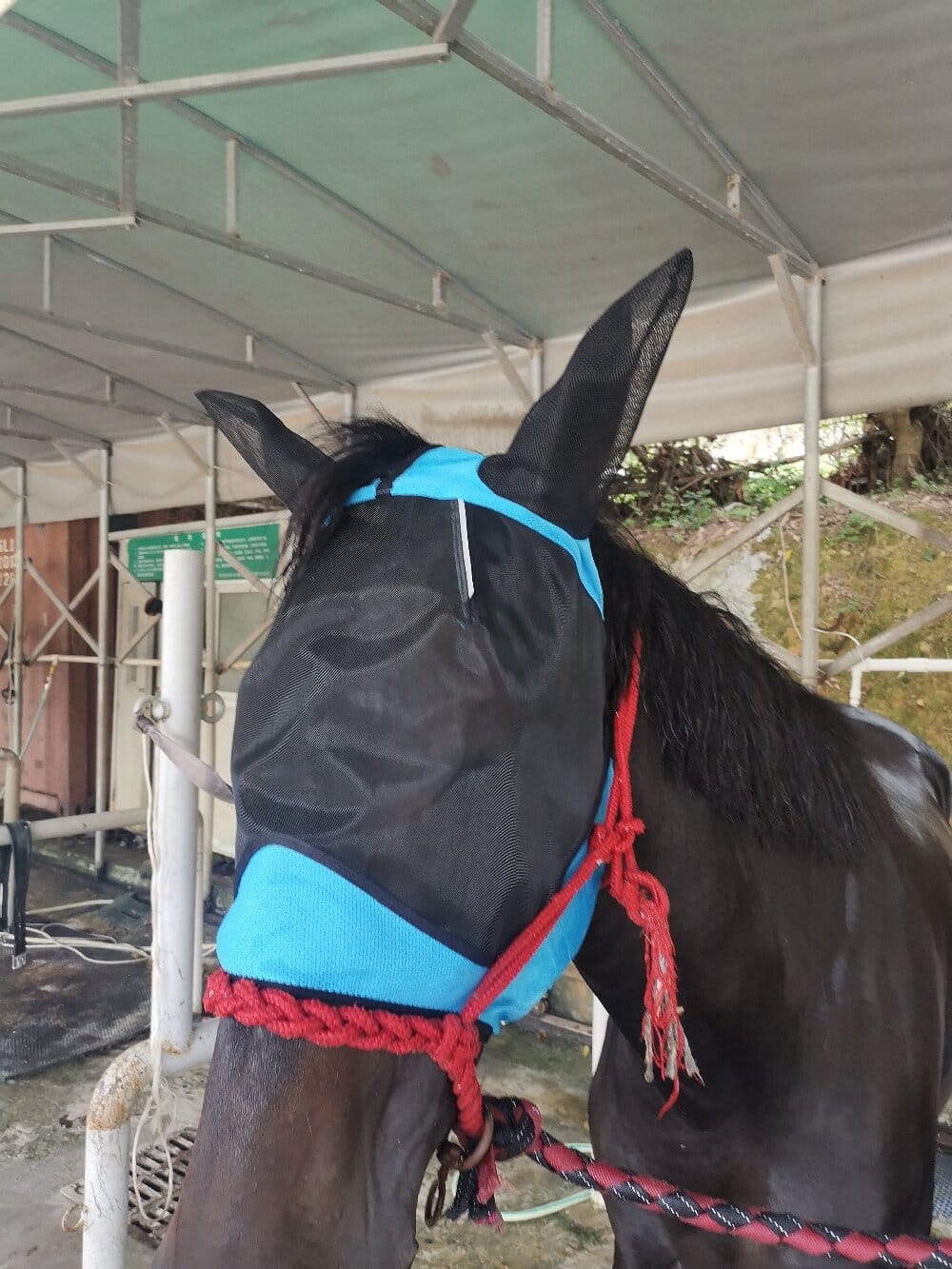
When my gelding started tossing his head every time we entered the pasture, I knew the horse fly mask had to become part of our daily routine. The relentless buzzing, the stamping, the watery eyes — it was clearly more than just annoyance. So I decided to approach fly protection the way I approach any barn problem: systematically, with observation, testing, and honest notes. What follows is my personal methodology for choosing and using a fly mask, from fit checks to field trials.
My Methodology for Choosing the Right Horse Fly Mask
Before buying anything, I set clear criteria. A fly mask is not just fabric over the eyes; it is a piece of daily equipment that has to survive mud, rain, rubbing, and a horse who thinks everything is a toy. My evaluation framework has four parts:
- Coverage: Does it protect eyes, ears, and nose without blocking vision?
- Fit: Can I adjust it so it stays put without pressure points?
- Durability: Will the mesh and binding hold up to turnout and washing?
- Comfort: Does my horse accept it calmly, or does he rub it off within minutes?
I also consider UV protection, because glare and sunlight can irritate sensitive eyes, especially in horses with pale skin or existing eye conditions. Secondary keywords like fly bonnet, equine eye protection, and insect screen all point to the same goal: keeping pests away while letting air flow freely.
Step-by-Step Fit and Field Testing
Here is the process I follow each time a new mask arrives. It takes about twenty minutes, but it saves weeks of frustration.
- Measure first. I use a soft tape to measure from behind the ears to the end of the nose, plus the width across the brow. Every brand fits differently, so I write the numbers down in a barn notebook.
- Adjust the straps. I loosen every strap before putting the mask on, then tighten gradually. Two fingers should slide under the noseband and cheek straps.
- Check the eyes. The mesh should sit slightly away from the eyeball, never touching lashes. If it touches, I size up or choose a different cut.
- Introduce slowly. I let my horse sniff the mask, then place it on for a few minutes in the stall with hay. Then I remove it and repeat later.
- Turnout trial. The real test is a full day outside. I watch for rubbing, sweating, or attempts to remove it. If he shakes his head repeatedly, the fit is wrong.
I also keep a simple log: date, weather, hours worn, and any skin irritation. This data helps me decide whether a mask is a keeper or a return.
What I Learned About Materials and Maintenance
Not all mesh is equal. Finer mesh blocks tiny gnats but can trap heat, while coarser mesh allows more airflow but may let small flies through. I prefer a mask with a soft fleece binding at the edges, because it reduces rub marks on the face. For horses with long ears, ear covers need enough room to avoid pinching.
Cleaning matters more than I expected. I hand wash my masks in mild soap every week during peak fly season, then air dry them in the shade. A dirty mask can harbor bacteria and cause skin issues, which defeats the purpose of equine eye protection. I also rotate two masks so one is always clean and dry.
Final Thoughts on Fly Mask Selection
Using a methodical approach turned a frustrating chore into a manageable routine. I now know exactly which size, style, and material works for my horse, and I can spot problems before they become sores or stress. If you are tired of watching your horse fight off flies, start with measurements, test patiently, and keep notes. A well-fitted fly mask is not a luxury — it is a practical tool that supports comfort, vision, and calm during the worst insect months.