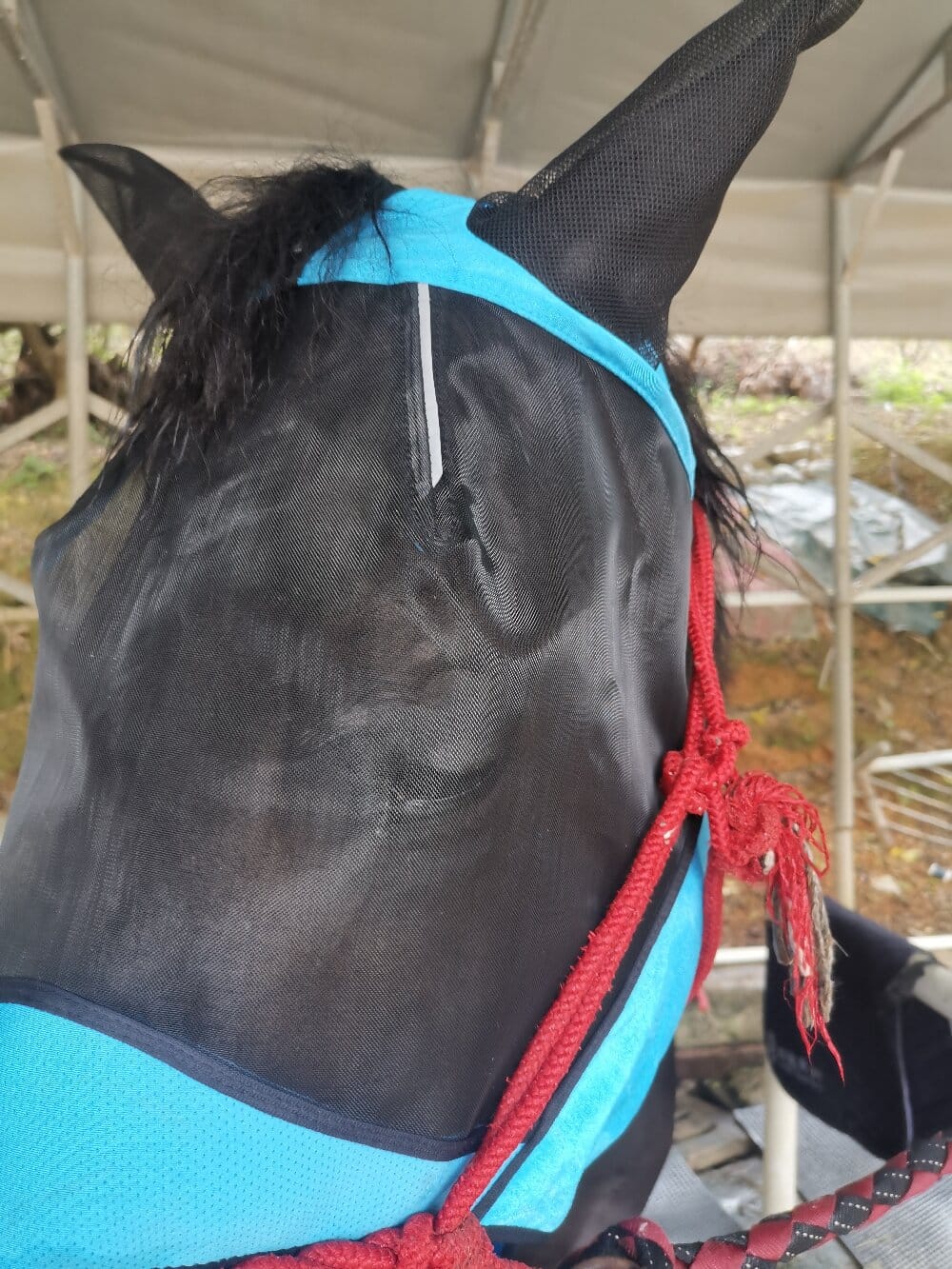
When a horse fly mask is chosen thoughtfully, it can transform a horse’s summer from a constant battle against insects into a manageable, comfortable season. Consider the case of Redwood Stables, a mid-sized boarding and training facility that struggled for years with head-shaking, rubbed manes, and summertime irritability across its herd. The barn manager’s initial assumption was simple: any mesh face covering would do. What followed was a two-year experiment in materials, fit, and horse behavior that offers useful lessons for anyone weighing options for fly protection.
Perspective One: The Barn Manager’s View of Horse Fly Mask Durability
From an operations standpoint, the barn manager at Redwood Stables measured success in weeks of service, not days. Her notes from the first season were blunt: cheap masks with thin binding failed at the seams within a month, and ear holes stretched until the mesh sagged over the eyes. She eventually standardized on masks with reinforced stitching, double-locking throat straps, and a breathable yet tightly woven mesh that blocked biting insects without trapping heat.
Her practical checklist for evaluating any fly mask for horses now includes:
- Stitching density at stress points such as the browband and cheek edges
- Adjustable straps that stay fastened in pasture turnout
- UV-blocking fabric that resists fading and brittleness
- Ear coverage that accommodates different ear shapes without rubbing
Perspective Two: The Veterinarian’s Take on Fit and Eye Health
Dr. Elena Marsh, the practice veterinarian serving the stable, approached the issue from a clinical angle. She noted that ill-fitting fly masks were contributing to corneal irritation in two horses, largely because loose mesh folded inward and trapped debris against the eye. Her recommendation was a mask with a defined brow arch that keeps fabric off the eyeball and a soft fleece trim along the edges.
She also emphasized seasonal timing. In her caseload, horses wearing protective face gear during peak fly months showed fewer cases of conjunctivitis and insect-bite hypersensitivity around the muzzle and ears. She cautioned, however, that masks must be checked daily and removed for grooming, since accumulated sweat and dirt underneath can cause dermatitis.
Perspective Three: The Horse’s Behavior Tells the Story
Trainer Marcus Bell tracked changes in demeanor rather than fabric specs. Two of his lesson horses had developed head-shaking habits each June. After switching to a well-fitted, lightweight mask with mesh covering the nostrils and ears, both horses showed noticeably calmer ground manners within two weeks. He observed fewer head tosses during lunging and less tail swishing in the paddock.
Not every horse adapted equally. A sensitive mare initially resisted the ear covers, so the team transitioned her gradually, starting with short supervised wear sessions. The takeaway: even an excellent insect-protection mask requires patience and observation during the introductory period.
What the Case Study Reveals About Choosing Insect Protection
Redwood Stables ultimately adopted a tiered approach: full-coverage masks with ear protection for horses with known hypersensitivity, lighter mesh versions for daily turnout, and dedicated stabling masks for overnight wear. Costs rose slightly, but veterinary visits and replacement purchases dropped enough to offset the difference.
The broader lesson is that a quality horse fly mask is not a generic accessory but a fitted piece of protective equipment. Buyers should prioritize seam construction, eye clearance, secure fastenings, and breathability, then monitor each horse’s response during the first weeks of use. Viewed through operational, veterinary, and behavioral lenses at once, the humble face covering proves its value most clearly when it fits well and holds up to real pasture conditions.