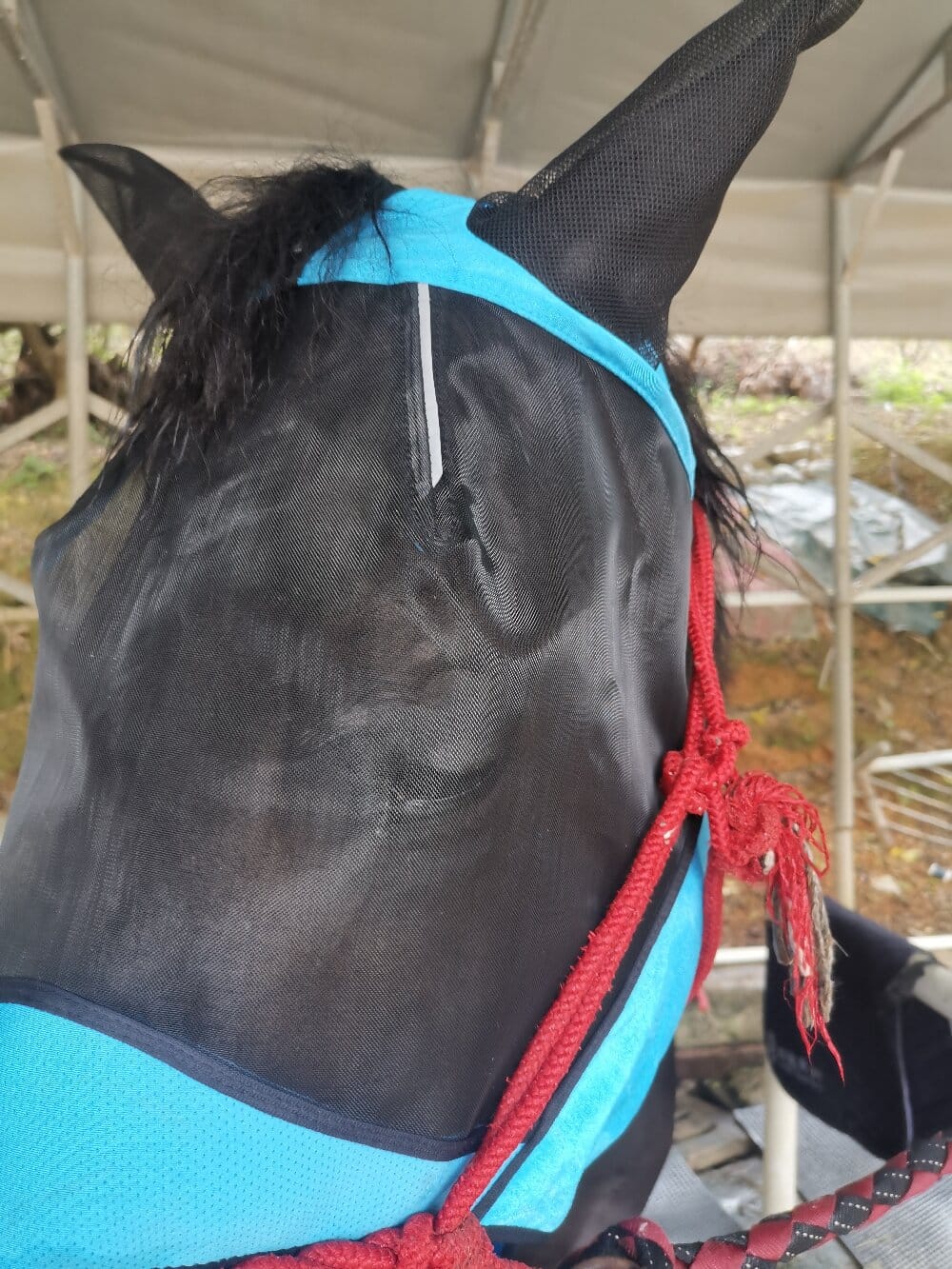
If you’ve ever watched your horse stomp, swish, and toss its head through the summer months, you already know the frustration of fly season. A quality horse fly mask is one of the simplest, most effective solutions to this seasonal problem, shielding your equine partner’s sensitive eyes and face from biting insects, dust, and harmful UV rays. But not all masks are created equal, and choosing the wrong one can create as many problems as it solves. Let’s walk through the common issues riders face and how to fix them.
Problem: Insects and Sun Are Irritating Your Horse’s Eyes
The core issue is straightforward. Flies, gnats, and mosquitoes cluster around the eyes and ears, causing irritation, spread of disease, and sometimes serious eye conditions. Add harsh sunlight and airborne debris, and your horse is constantly uncomfortable. A well-fitted fly mask for horses acts as a physical barrier, keeping pests away while still allowing full visibility. Look for masks with fine mesh that blocks tiny bugs but lets air circulate, and consider UV-blocking fabric if your horse has sensitive skin or lives in a sunny climate.
Problem: Poor Fit Leads to Rubs and Escape Acts
We’ve all seen a horse wearing a mask that’s slipped over one eye or dangling from an ear. Ill-fitting gear rubs against the face, creates sores, and ends up in the pasture within minutes. The fix is all about measurement and adjustment:
- Measure carefully: Check the distance from poll to muzzle and around the jaw before buying.
- Choose adjustable closures: Hook-and-loop straps at the throat and under the jaw let you fine-tune the fit.
- Look for fleece binding: Soft edging at pressure points prevents chafing.
- Consider ear coverage: Removable ear covers protect against midges without trapping heat.
Problem: Masks Don’t Stay On or Don’t Last
Durability is a real concern when your horse lives out. Cheap stitching and weak mesh tear within weeks, and masks lost in the field become expensive replacements. Solve this by prioritizing reinforced seams, breathable yet tough mesh, and secure fastenings that are easy for you to open but hard for your horse to remove. A spare mask on hand is also a smart investment, so a torn strap never leaves your horse unprotected while you wait for a replacement.
Problem: You’re Unsure When and How to Use It
Some owners worry that masks trap heat or interfere with vision. In practice, a properly fitted horse fly mask is lightweight and designed for all-day wear during turnout. Rotate masks for cleanliness, check daily for rubs or damage, and remove at night if your horse is stabled. During peak fly season, combining a mask with fly spray and good stable hygiene gives the best protection. If your horse has a history of eye issues, consult your vet before use.
Solving Fly Season for Good
Fly season doesn’t have to mean a miserable horse. By addressing the real problems — irritation, poor fit, durability, and proper use — you can turn a simple piece of protective gear into a daily source of comfort. Choose a well-made horse fly mask, fit it thoughtfully, maintain it regularly, and your horse will thank you with calmer eyes and a happier attitude all summer long.