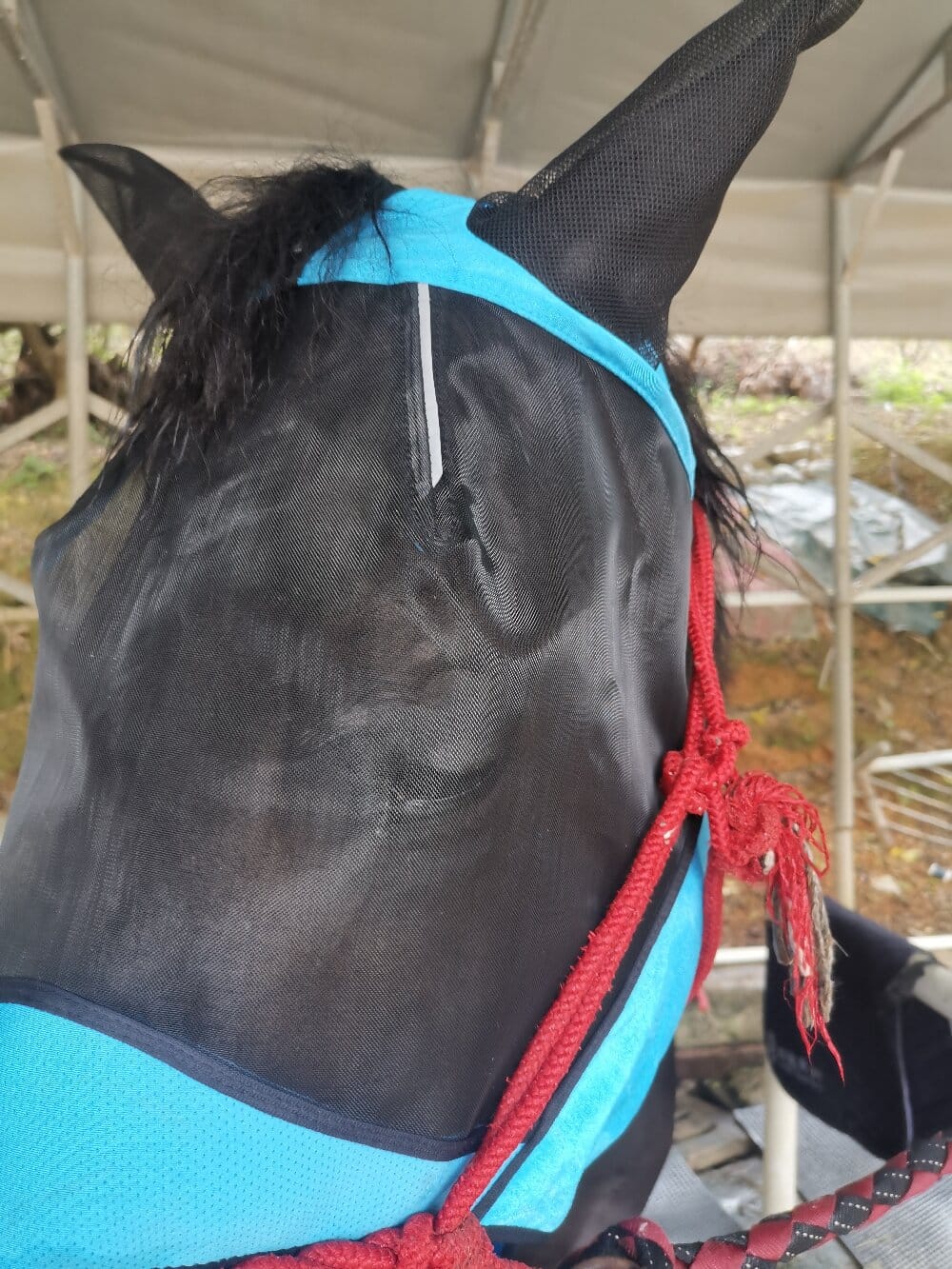
If you have ever watched your horse stomp, swish, and shake its head nonstop during fly season, you already know how miserable flying insects can make them. A well-fitted horse fly mask is one of the simplest, most effective solutions I have found for protecting your horse’s sensitive eyes and face from flies, gnats, and other biting pests. Over the years, I have learned that solving the fly problem is not just about buying any mask—it is about finding the right one for your horse’s needs, environment, and personality. Let me walk you through the common problems riders face and how to solve them practically.
Problem One: Eye Irritation and Infection
The most pressing issue with flies is the damage they do to your horse’s eyes. Flies feed on tears and can spread bacteria, leading to conjunctivitis and other infections. A quality fly mask creates a physical barrier that keeps insects away from the eyes while still allowing full visibility. When shopping, look for masks with fine mesh that blocks even tiny gnats, and make sure the material is breathable so your horse does not overheat. I always recommend checking that the eye area is generously sized—masks that rub against the eyelashes cause more harm than good.
Problem Two: Poor Fit and Rubbing
A fly mask that slips, twists, or rubs is worse than no mask at all. The solution starts with accurate measurement. Measure from the center of your horse’s forehead down to the tip of the nose, and check the width across the cheekbones. Look for adjustable straps, fleece padding at pressure points, and a design that stays put without being tight. If your horse has a narrow face or a broad forehead, search for brands that offer multiple sizes rather than settling for a one-size-fits-all approach.
Problem Three: Masks That Come Off (or Get Destroyed)
Some horses are escape artists. They rub masks off on fences, pull them off with a hoof, or shred them during play. The fix here is twofold: choose durable construction with reinforced stitching and consider a mask with a breakaway safety strap. Breakaway designs release under pressure, which protects your horse from injury if the mask snags on something. For turnout buddies who love to groom each other, a mask with a smooth outer surface reduces the chance of teeth catching the fabric.
Problem Four: Seasonal and Environmental Variation
Not all fly seasons are created equal. In peak summer, you may want a mask with ear protection and a nose extension to guard against biting midges. In milder weather, a lighter, simpler mask may be more comfortable. Some masks now include UV-blocking fabric, which is a bonus for horses with sensitive skin or pink skin around the muzzle. I suggest owning at least two masks—one heavy-duty version for peak season and one lightweight option for everyday wear—so you always have a clean backup.
Problem Five: Cleaning and Maintenance
Dirty masks harbor bacteria and lose their effectiveness. The solution is a simple routine: rinse the mask weekly with mild soap and warm water, air-dry it completely, and inspect the seams and straps for wear. Rotating between two masks extends their lifespan and ensures your horse always has protection while one is being washed.
Final Thoughts on Choosing a Horse Fly Mask
Protecting your horse from flies does not have to be complicated. Focus on proper fit, durable materials, breathable mesh, and a maintenance routine, and you will solve the most common fly-mask frustrations. A good horse fly mask is an investment in your horse’s comfort and eye health—and once you find the right one, you will wonder how you ever managed without it.