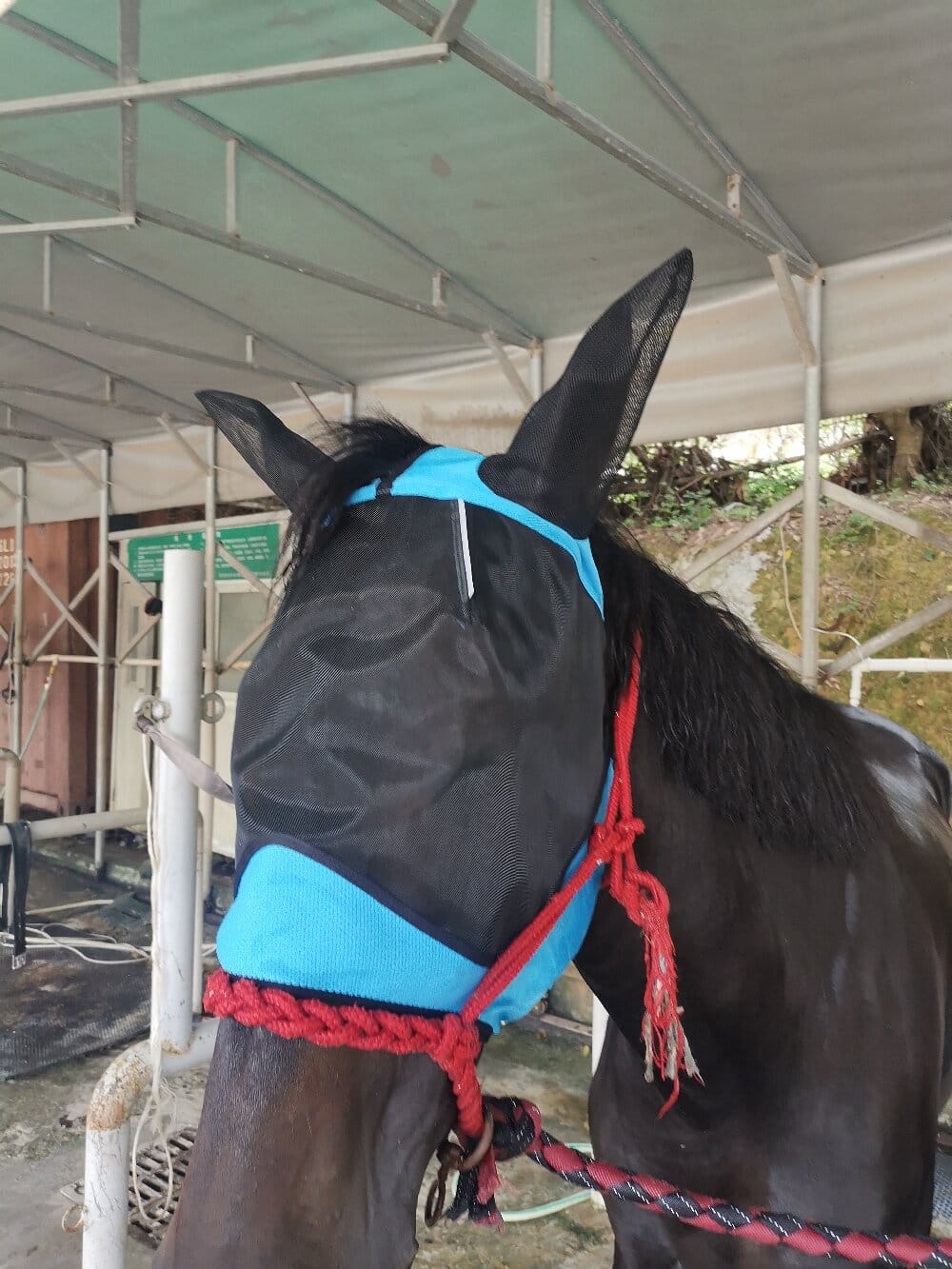
When I first noticed my mare, Daisy, stamping her hooves and tossing her head every summer, I knew flies were more than a nuisance—they were affecting her comfort and focus. That’s when I decided to approach the problem methodically and test a horse fly mask. Instead of guessing, I treated fly protection like a small research project: observe, select, apply, and evaluate. This methodology helped me choose the right fly mask and use it consistently, and it can work for you too.
Step One: Observing the Problem Before Buying a Horse Fly Mask
Before purchasing anything, I spent a week observing Daisy’s behavior. I noted when she was most bothered—mid-morning and late afternoon—and where flies gathered: around her eyes, ears, and muzzle. I also checked for signs of irritation, like watery eyes and rubbed patches near the ears. This baseline gave me clear criteria. A good fly mask needed to cover the eyes and ears without pressing on her face, and it had to stay put during turnout. Observation first, purchase second—that order saved me from buying an ill-fitting mask.
Step Two: Choosing the Right Horse Fly Mask Features
With my notes in hand, I compared options systematically. I looked for breathable mesh that blocks biting insects while allowing airflow, soft binding at the edges to prevent rubs, and adjustable straps for a secure fit. I also considered UV protection, since Daisy has pink skin around her muzzle. My checklist looked like this:
- Fine mesh that keeps out small flies without trapping heat
- Ear coverage with room for her ears to move freely
- Fleece or soft trim at pressure points
- Adjustable hook-and-loop or buckle closures
- Light color to reflect heat
I measured Daisy’s head according to the manufacturer’s sizing guide rather than eyeballing it—accuracy matters more than assumption.
Step Three: Introducing and Fitting the Mask Gradually
My next step was careful introduction. I let Daisy sniff the mask, then rewarded her with a treat when she stood calmly. I fitted it loosely at first, checked that it didn’t touch her eyelashes, and confirmed she could blink and move her ears. I watched her in the paddock for the first hour. When she rolled and the mask stayed in place without twisting, I knew the fit was right. Consistency followed: I used the mask during daytime turnout and removed it at night, inspecting her face daily for rubs or moisture.
Step Four: Evaluating Results and Adjusting My Routine
After two weeks, I reviewed my observations. Daisy’s head tossing had dropped noticeably, and the irritated patches near her ears began to heal. I washed the mask every few days with mild soap—dirty mesh attracts flies and irritates skin. I also kept a spare so one could dry while the other was worn. This simple rotation kept the routine sustainable.
What This Method Taught Me About Fly Protection
Treating a horse fly mask as part of a structured process—observe, select, fit, evaluate—made a real difference for my horse. The mask alone isn’t a cure-all; I paired it with fly spray, clean stalls, and smart turnout timing. But as a first line of defense, a well-chosen fly mask reduced stress and protected sensitive areas. If you’re facing the same summer battle, slow down, observe your horse, and let evidence guide your choice. Your horse will thank you with a calmer, more comfortable season.