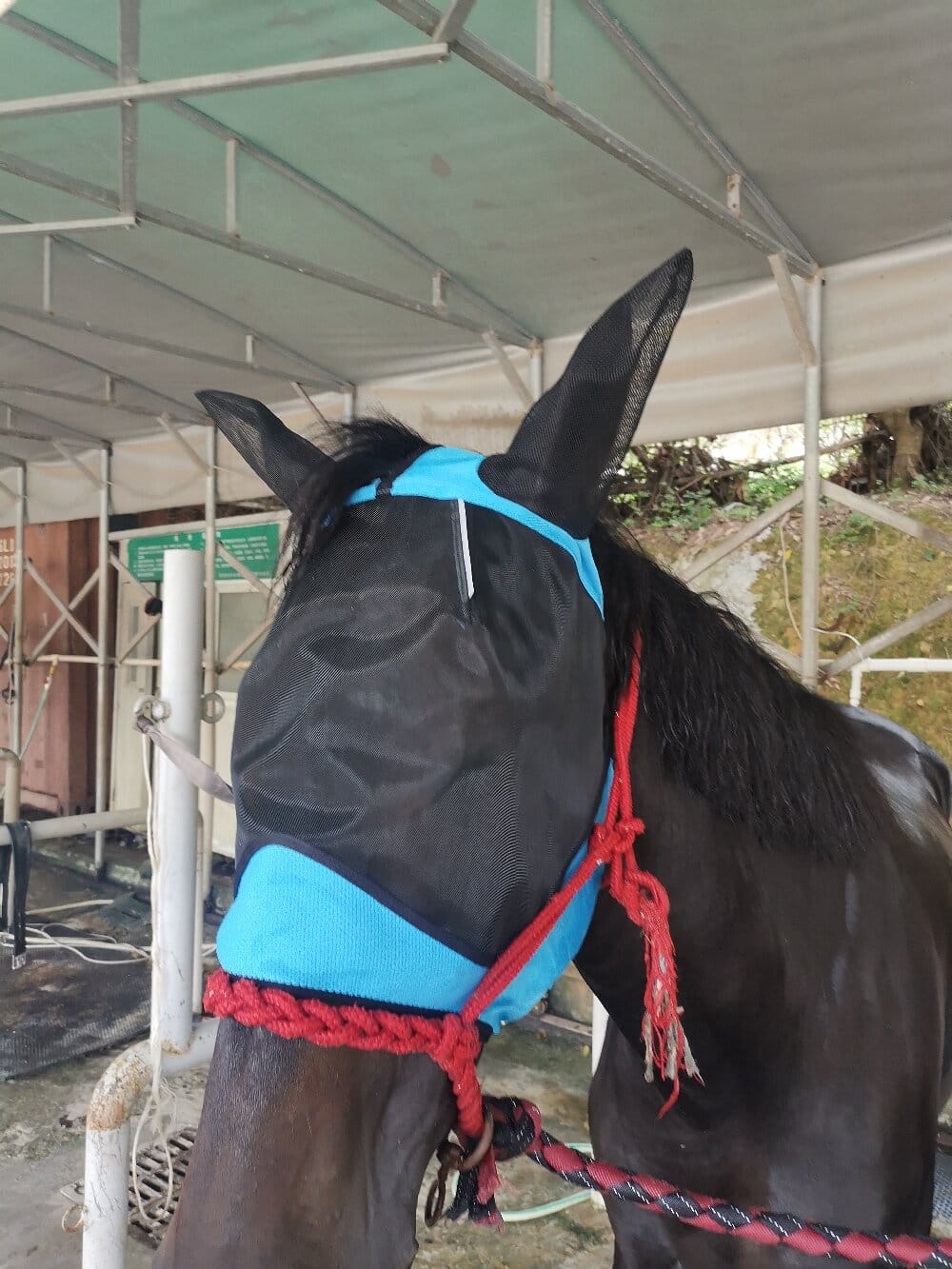
Every summer, the equestrian world collectively reaches for the horse fly mask as if it were a sacred ritual. Walk into any tack shop between May and September and you’ll be told, with absolute certainty, that your horse cannot survive without one. But here’s my critical take: the horse fly mask is one of those products we’ve accepted so completely that we’ve stopped asking whether it actually works as advertised. I’m not saying fly masks are useless—far from it. I’m saying we owe it to our horses (and our wallets) to think harder about what these mesh hoods really do, what they don’t, and why the marketing around them deserves a raised eyebrow.
The Horse Fly Mask Under the Microscope: What the Claims Really Mean
Manufacturers promise protection from flies, gnats, and UV rays, often with language that implies total invincibility. Let’s apply some critical thinking to those claims. A mesh mask can physically block large biting flies from reaching the face, no argument there. But the fine mesh that stops a stable fly also traps heat, and horses dissipate heat heavily through their heads and ears. So the very barrier that protects can also compromise comfort on a 95-degree afternoon. That’s a trade-off the packaging rarely mentions.
Then there’s the UV claim. Yes, certain fabrics block ultraviolet light, and that matters for horses with pink skin or photosensitivity. But “UV protection” on a label is not a standardized guarantee across brands. Some cheap masks stretch, thin out, and lose effectiveness after a few washings. If you’re buying a fly mask specifically for sun protection, you’re trusting a claim that’s often unverified.
Fit, Rubs, and the Uncomfortable Truth About Convenience
Here’s where my skepticism sharpens. A poorly fitted fly mask is worse than no mask at all. It can rub the eyelashes, trap debris against the eye, or slip down over the nostrils. I’ve seen horses develop raw patches behind the ears from masks that seemed fine on the shelf. The product solves one problem while quietly creating another, and that paradox is exactly what critical thinking should expose.
We also accept the daily labor of putting masks on and taking them off without question. Is that convenience for the horse, or convenience for us? Sometimes the answer is both. But if a horse lives out in a herd, a mask invites curious teeth from pasture mates, and a torn mask flapping near the eye is a genuine hazard. The “set it and forget it” mindset is a marketing fantasy, not a management plan.
When a Horse Fly Mask Genuinely Earns Its Place
To be fair and balanced, there are real scenarios where the fly mask shines:
- Horses with eye conditions or recent injuries that need physical shielding from insects.
- Individuals with pink-skinned faces prone to sunburn or photosensitivity.
- Turnout during peak deer fly and face fly season in regions where pressure is severe.
- Horses recovering from ocular surgery under veterinary guidance.
In these cases, a well-fitted mask from a reputable brand is a sensible tool. The key word is “tool”—not miracle, not necessity, not a substitute for good barn management like fly traps, fans, and manure control.
My Verdict: Buy Deliberately, Not Desperately
A horse fly mask can be a worthwhile investment, but only when you’ve asked the uncomfortable questions: Does it fit my horse’s head shape? Is the mesh breathable enough for my climate? Am I buying UV protection or just the label? Will my horse tolerate it, or will it become a rubbing, slipping nuisance? Critical thinking doesn’t mean rejecting the product—it means refusing to let marketing do your reasoning for you. Try one, inspect it daily, watch for rubs, and be willing to admit when a mask isn’t helping. Your horse can’t read the packaging, but you can—and that’s exactly why you should.