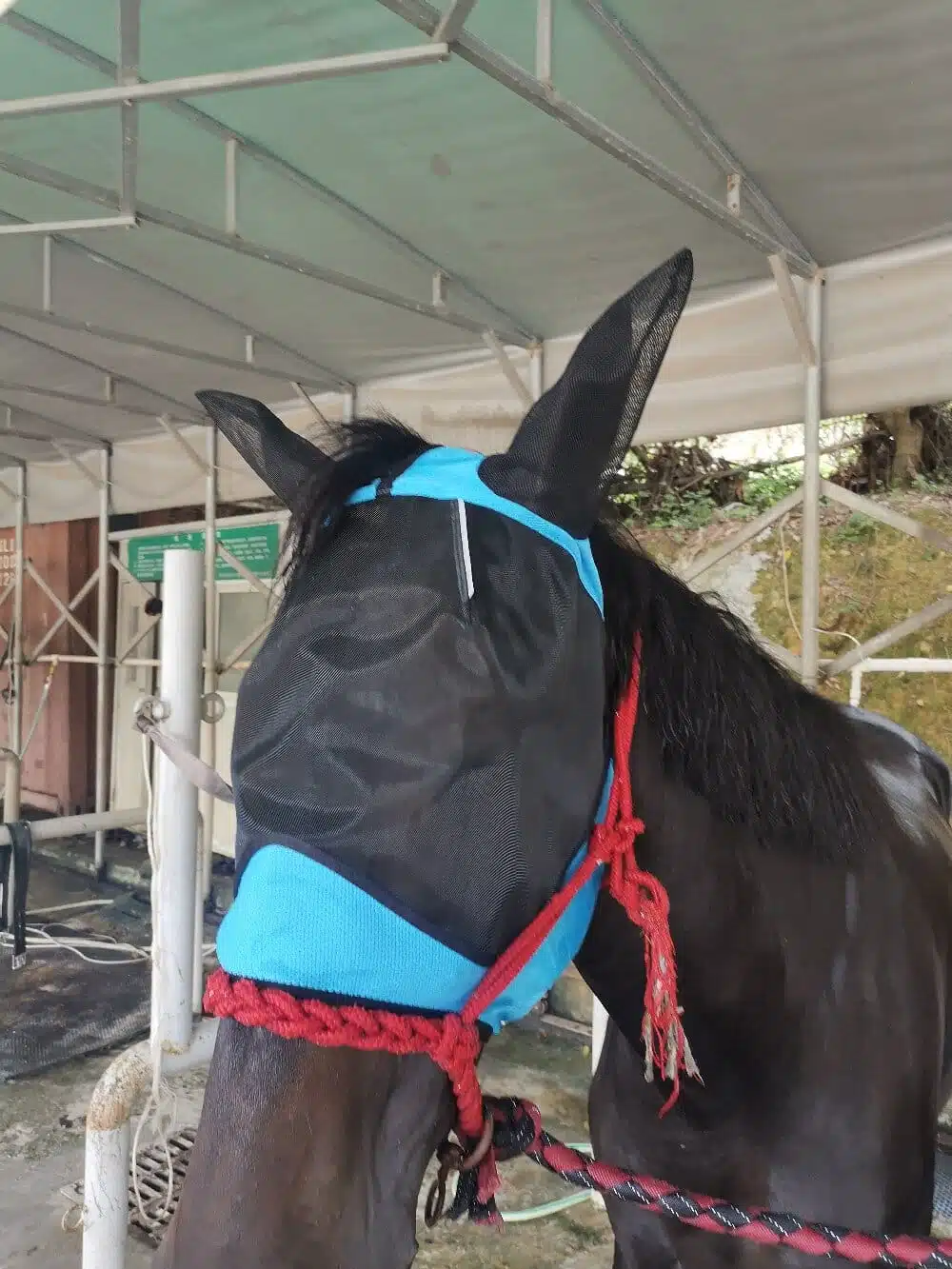

When our family first brought home a senior Quarter Horse named Duke, we quickly learned that summer turnout was less about green pastures and more about relentless insect warfare. After weeks of watching him stomp his feet, shake his head violently, and rub his cheeks raw against fence posts, we finally invested in a quality horse fly mask. From that first afternoon, the change in his behavior was nothing short of remarkable, and today we consider this simple piece of nylon mesh to be as vital as his feed ration or hoof care.
The Immediate Difference We Observed in the Field
Within hours of fitting Duke with his first fly mask, the constant head tossing diminished by at least eighty percent. He resumed grazing with a calm, steady rhythm that we had not witnessed since early spring. The mask’s mesh material allowed him to see clearly—horses have excellent peripheral vision—but it created a physical barrier that kept flies, gnats, and mosquitoes away from his eyes, ears, and the tender skin around his face. Interestingly, we also noticed that he stopped rubbing his face on trees and stall doors, which meant fewer scratches and less hair loss around his cheekbones.
For those unfamiliar with these products, a horse fly mask typically covers the entire face, fastening with hook-and-loop straps behind the ears and under the throatlatch. The key is the fine mesh that blocks ultraviolet light and insects while permitting airflow. Duke’s mask had a padded nose piece to prevent chafing, and we chose a style with molded cups over the eyes so that the mesh never touched his cornea. This design detail proved crucial, as any fabric rubbing against the eyeball would have caused tearing and discomfort.
Selecting the Right Mask: Lessons Learned Through Trial and Error
Our first attempt was a bargain-bin model that lacked a sturdy frame. Within two weeks, the mesh sagged and rested directly on Duke’s eyelids, causing him to squint constantly. We replaced it with a mid-range mask featuring a rigid, UV-stabilized frame. The difference was night and day. Here are the specific features we now insist upon:
- Strong, pre-shaped mesh cups: They keep the material at least half an inch away from the eye surface.
- Double-stitched seams: Cheap masks tear at the ear openings, especially when horses scratch against trees.
- Adjustable triple straps: One behind the poll, one over the crown, and one under the jaw ensure a snug but not tight fit.
- Reflective trim: This helps visibility during dusk or early morning turnout.
We also learned to check the mask daily. A single torn seam can allow a fly to slip inside, which creates a panic situation. If a horse gets a fly trapped under the mask, they will often bolt or rub violently, potentially causing eye injury. For this reason, we keep a spare mask in the tack room at all times. Duke has never injured himself, but a friend’s horse once managed to rip a mask off and step on it, and having a backup prevented a missed turnout day.
Seasonal Use and Maintenance Tips That Prolonged the Mask’s Life
Contrary to popular belief, a horse fly mask is not just for peak summer months. We continued using Duke’s mask well into October, as late-season flies are often more aggressive. However, we removed it during heavy rain, as wet mesh can promote bacterial growth around the eyes if left on for days. Washing was simple: we rinsed it in cold water with a mild soap every week, then let it air dry in the shade. We never used a dryer, as heat warps the plastic frame.
Another important realization came when we noticed Duke’s white face getting sunburned despite the mask. We then applied a zinc oxide cream around his muzzle and nostrils, which the mask cleverly left exposed. The combination of fly protection and sunblock kept his skin soft and unblemished all season.
Our Honest Verdict After Two Summers of Use
For any owner battling flies, especially those with horses who have pink skin or sensitive eyes, a well-fitted fly mask is non-negotiable. We did not see any negative impact on Duke’s vision or his ability to interact with pasture mates. He could still eat, drink, and even roll without the mask shifting, thanks to the adjustable straps. The only adjustment period lasted about fifteen minutes, during which he shook his head occasionally before forgetting it was there.
In conclusion, our experience has shown that a horse fly mask is a humane, effective, and low-cost solution to a problem that can otherwise cause significant stress. Duke’s eyes are clearer, his face is free of raw patches, and our peaceful evening barn checks are no longer filled with the sound of buzzing and stamping. We wholeheartedly recommend investing in a high-quality mask, checking its fit weekly, and using it consistently during insect season. The peace of mind—for both horse and owner—is genuinely priceless.