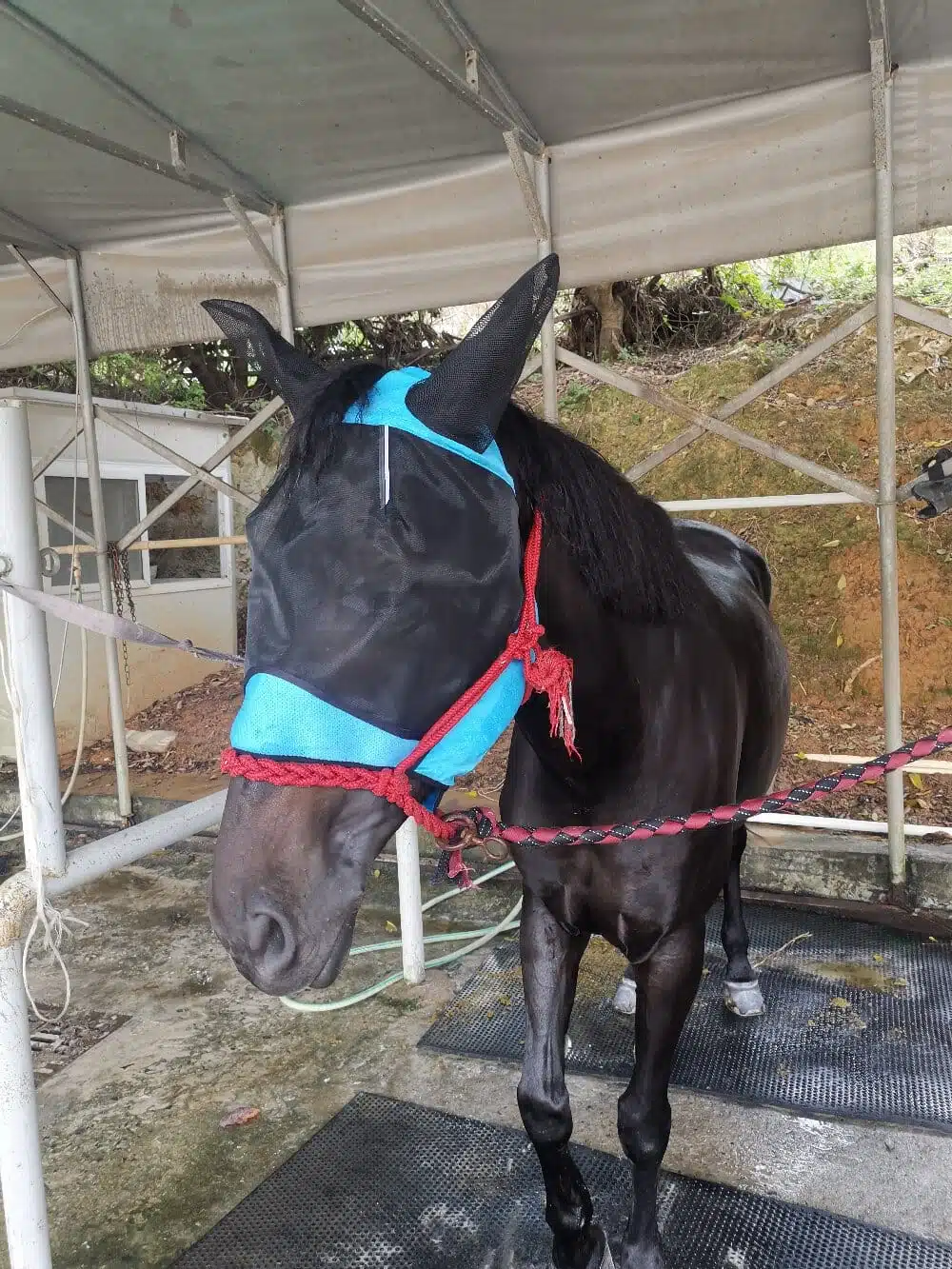

As an equestrian professional with over fifteen years of hands-on experience managing dozens of horses through sweltering summers, I can tell you without hesitation that a quality horse fly mask is not a luxury—it is an absolute necessity for equine well-being. I have watched horses suffer through relentless insect attacks, and the difference a proper mask makes is nothing short of transformative. In my practice, a well-fitted fly mask prevents everything from painful conjunctivitis to the frantic tail-swishing and head-tossing that ruins a ride before it begins.
The Unseen Dangers of Summer Pests (and Why the Horse Fly Mask Is Your First Defense)
Most horse owners understand that flies are annoying, but few realize the medical toll they take. The common housefly can transmit Habronema larvae (summer sores) directly into the eye or wound. More seriously, the Culicoides midge—barely visible to the naked eye—causes sweet itch, a miserable allergic dermatitis that leads to bald patches, thickened skin, and constant rubbing. I have treated horses who rubbed their manes raw from sweet itch before owners instituted fly mask use. A durable horse fly mask with ultraviolet (UV) protection also shields the sensitive eyelid and conjunctiva from harmful sun rays, reducing the risk of squamous cell carcinoma in light-skinned breeds like Appaloosas and Paints.
My professional recommendation is to choose a mask with a stable, molded nose piece. Many cheaper masks collapse onto the eye, which defeats the purpose. Look for a structured cup over the eye area, allowing the horse to blink naturally while blocking debris. The material should be a breathable, high-denier polyester mesh that allows airflow but blocks 70% or more of UV light. I have tested dozens of brands in my barn, and the ones with darker mesh consistently offer superior glare reduction while remaining clearly transparent for the horse’s vision.
How to Fit a Horse Fly Mask Like a True Horseperson
Fit is everything. A loose mask rubs the poll and ears; a tight mask restricts vision and traps heat. Here is the step-by-step method I teach every client:
- Check the crown piece: You should be able to slip two fingers flat under the crown. If you can fit three, it is too loose and will shift.
- Evaluate the nose seam: The mask should sit about two inches below the eyes, not pressing on the nostrils. The horse should be able to yawn and eat freely.
- Inspect the ears: Some masks have ear holes, others have a full ear cover. For most horses, the full ear cover offers more protection against gnats, but make sure the horse accepts it during a training session.
- Check for rubbing: Run your hand along the jawline and cheek. The horse fly mask should not have any rough seams or tags. If it does, cut them off before the first use.
I always recommend buying a mask with a detachable, full-neck cover if your horse is sensitive to sweet itch. This extends protection to the entire poll, throatlatch, and upper neck—the favorite feeding ground for midges. A standalone mask is fine for the average horse, but the combination unit is a game-changer for sensitive animals.
Cleaning and Longevity: Making Your Investment Last
A high-quality horse fly mask can last two or three seasons if maintained. However, I have seen masks degrade in a single month when left in the sun or soaked in sweat without a rinse. Here is the expert protocol:
- Rinse the mask with cold water after every ride to remove salt and oils that degrade mesh fibers.
- Once a week, hand wash with mild dish soap. Do NOT use bleach or fabric softener—these break down UV coatings.
- Air dry in the shade, never in direct sunlight or a dryer. High heat warps the nose piece and shrinks the mesh.
- Replace the mask immediately if the mesh shows a tear, a broken seam, or a cracked plastic frame. A single hole invites a whole swarm of insects.
The Professional’s Verdict: A Small Investment for Major Peace of Mind
After decades of observation, I have concluded that a well-made fly mask is the single most cost-effective piece of summer tack you can buy. It prevents eye infections, curbs allergy outbreaks, and dramatically reduces stress behavior. I have personally seen a formerly irritable mare transform into a calm, focused riding partner simply because the mask eliminated the constant irritation of flies. Horse fly mask usage is not merely about comfort—it is about preserving vision, health, and the horse’s willingness to work. In my expert opinion, if you can only afford one summer accessory, make it this one. Your horse will thank you, and you will notice the difference every time you step into the paddock.