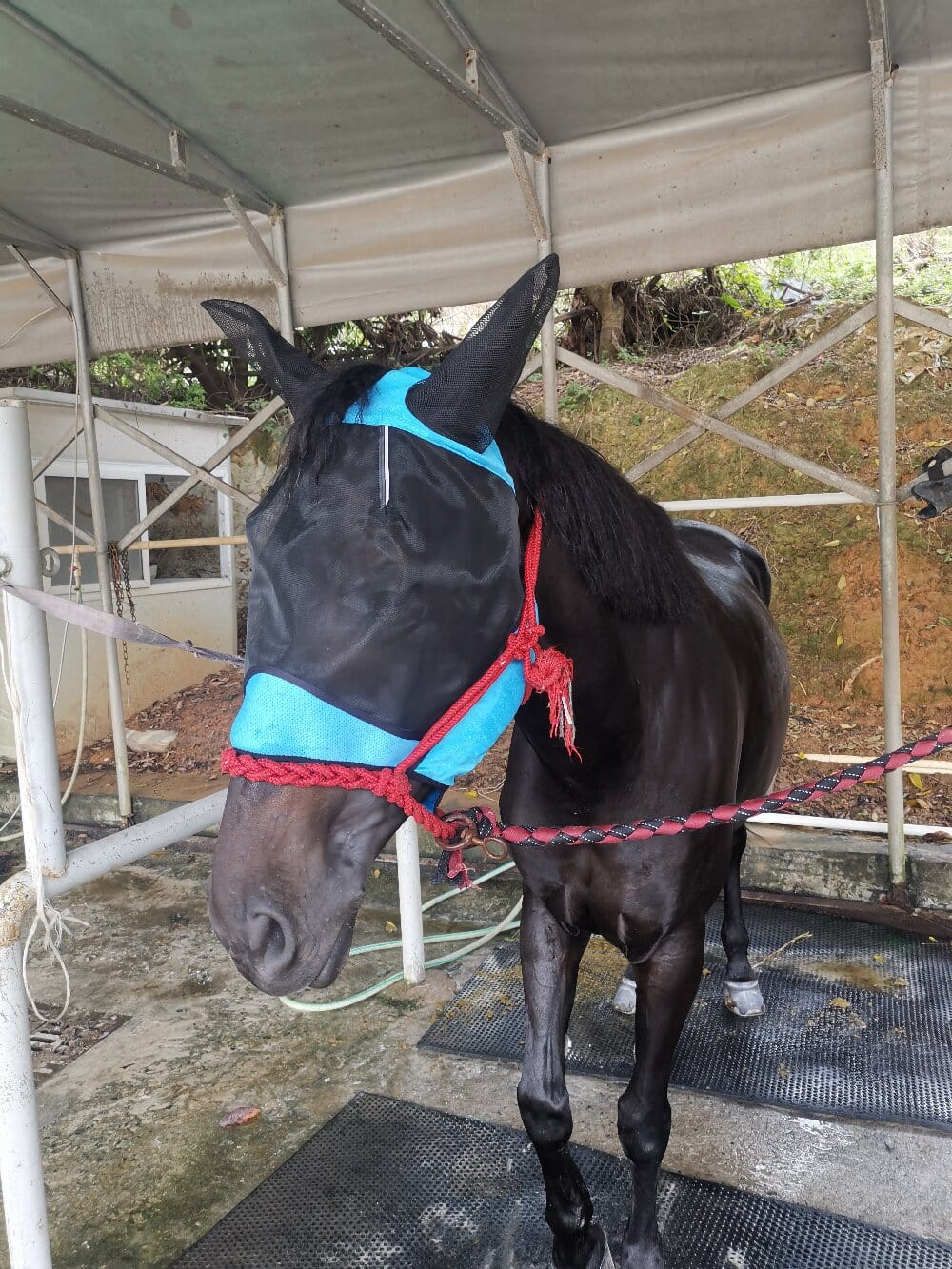
When Sarah, a dressage rider in Kentucky, first clipped a horse fly mask onto her mare’s halter, she assumed it was a simple seasonal accessory. Three summers later, she describes it as essential tack. Her experience mirrors that of thousands of equestrians who have moved the horse fly mask from the “nice-to-have” shelf to the daily grooming kit. This case study examines that shift from three perspectives—the veterinary view, the barn manager’s practical outlook, and the horse’s own behavioral response—to show why this piece of protective gear has earned its place in modern horse care.
The Veterinary Perspective: Protection Beyond the Nuisance Factor
Dr. Ellen Marsh, an equine veterinarian specializing in dermatology, frames the horse fly mask as a preventive health tool rather than a comfort item. In her practice, she regularly treats insect bite hypersensitivity, a condition where fly saliva triggers intense itching, hair loss, and secondary infections along the face and ears.
“Owners often underestimate how much damage a few flies can do around the eyes,” Marsh explains. “A well-fitted fly mask creates a physical barrier that reduces exposure to biting midges, stable flies, and face flies.” She notes that the mesh also filters harsh sunlight, which can be valuable for horses with sensitive eyes or those recovering from corneal ulcers. From a clinical standpoint, the mask supports comfort, reduces the need for topical repellents, and lowers the risk of self-trauma caused by rubbing.
A Barn Manager’s Case Study: Durability, Fit, and Daily Routine
At a 40-horse boarding facility in Virginia, barn manager Tanya Reyes has tested nearly a dozen fly mask designs over five seasons. Her case notes read like a product audit: masks with reinforced binding survived turnout; those with thin elastic lost shape within weeks; ear coverage mattered for horses pastured near wooded areas.
Her practical checklist for choosing a fly mask includes:
- Mesh density that blocks tiny midges without trapping heat
- Fleece or soft binding at the brow to prevent rub marks
- Adjustable throat straps that stay secure during rolling
- UV-resistant fabric that holds up to daily washing
Reyes also emphasizes fit over brand loyalty. “A loose mask invites debris and can slip over the eyes, which is worse than no mask at all,” she says. Her team now does a quick fit check every morning during turnout, and she reports fewer skin irritations and calmer horses at feeding time.
Behavioral Evidence: What Horses Tell Us About Fly Masks
From the horse’s side of the equation, the data is behavioral rather than verbal. Owners in the case study consistently reported reduced head tossing, fewer attempts to rub faces on fences, and lower stall-stomping frequency during peak fly hours. One trainer observed that a notoriously head-shy gelding accepted his mask within a week, likely because it eased the irritation that made him defensive around his ears.
It is worth noting that adjustment takes patience. Introducing the horse fly mask gradually—first during grooming, then short turnout sessions—improves acceptance. Pairing the mask with a fly sheet and good pasture hygiene creates a layered defense that most horses tolerate well.
Conclusion: Lessons From the Case Study
Across veterinary, management, and behavioral perspectives, the evidence converges: a properly fitted fly mask is a low-cost, high-value investment in equine welfare. The key takeaways are choosing breathable mesh, prioritizing fit and soft binding, and introducing the mask slowly. For owners like Sarah, the payoff is visible—a quieter horse, healthier skin, and one less seasonal worry.