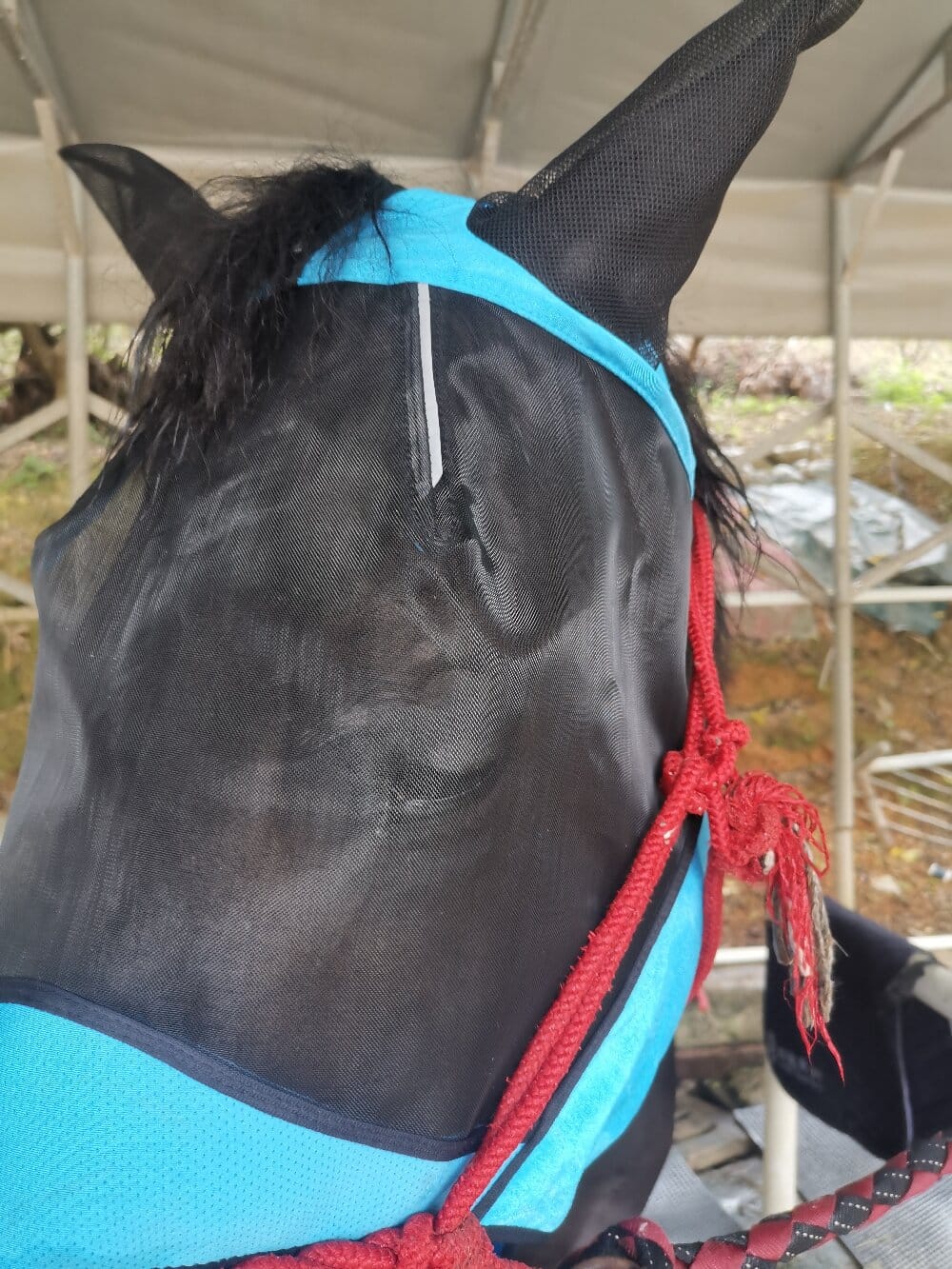
If you’ve ever watched your horse stomp, swish, and shake its head through an entire summer afternoon, you already understand why a horse fly mask belongs in every tack room. Flies, gnats, and midges don’t just cause passing annoyance — they can trigger eye infections, spread disease, and turn a calm pasture into a battleground. I’ve tried everything from sprays to stationary fans, and honestly, a well-fitted fly mask remains the simplest, most reliable line of defense. This practical guide walks you through what to look for, how to size one correctly, and the mistakes I see owners make again and again.
What a Horse Fly Mask Actually Does
At its core, a fly mask is a lightweight mesh covering that shields the eyes, forehead, and sometimes the ears and muzzle from biting insects. Good models block UV rays too, which matters for horses with sensitive eyes or pink skin around the lids. Beyond pest protection, masks reduce squinting and head-shaking, helping your horse graze and rest more comfortably. Some designs also cushion the face against rubbing from halters or fly sheets, which is a nice bonus during turnout season.
Key Features to Look For in a Horse Fly Mask
Shopping online can be overwhelming, so I break it down into the details that genuinely affect comfort and durability:
- Mesh density: Fine mesh keeps out tiny gnats; slightly coarser mesh offers better airflow and visibility for fussy horses.
- Fit and adjustability: Look for fleece-lined edges and adjustable straps — usually a hook-and-loop closure under the jaw or a buckle system.
- Ear and muzzle coverage: Ear covers help with ear flies, while extended nose panels protect against gnats near the muzzle. Remove attachments your horse doesn’t need.
- Darting and shaping: Masks with eye darts sit off the eyes rather than pressing on lashes — a small detail with a big comfort payoff.
- Material quality: Breathable, rip-resistant fabric holds up to pasture life and repeated washing.
How to Size and Fit a Horse Fly Mask Correctly
Sizing is where most people go wrong, and it’s the number one reason masks get rubbed off or left hanging in a fence corner. Measure from the top of the poll to just below the cheekbone, and check the manufacturer’s chart rather than guessing by breed. A properly fitted mask should allow two fingers of space under the throat strap and sit smoothly without wrinkles over the eyes. Horses come in every shape — cob, warmblood, draft, and pony — so try before you commit to a full season if possible. If your horse has a wide forehead or heavy jaw, look for brands that offer separate size categories rather than one-size-fits-all options.
Common Mistakes I See Owners Make
Even a quality mask fails if it’s used carelessly. Watch out for these pitfalls:
- Leaving the mask on 24/7 without checking beneath it — inspect eyes and skin daily for rubbing or irritation.
- Ignoring the ears and poll — flies love these areas, and a mask without ear protection leaves a gap.
- Skipping washing — mesh collects dust and sweat, so rinse it weekly with mild soap.
- Using a damaged mask — a torn edge or stretched strap lets insects in and can catch on fences.
- Forgetting pasture buddies — a horse may rub a mask off on fencing, so check turnout conditions.
Final Thoughts on Choosing and Using Your Mask
A horse fly mask is a small investment with a big return: fewer eye issues, calmer turnout, and a happier horse through fly season. Prioritize fit, breathable mesh, and sensible coverage for your climate and your horse’s needs, then build a routine of daily checks and regular washing. Get those basics right, and you’ll wonder why you waited so long to add one to your grooming kit.