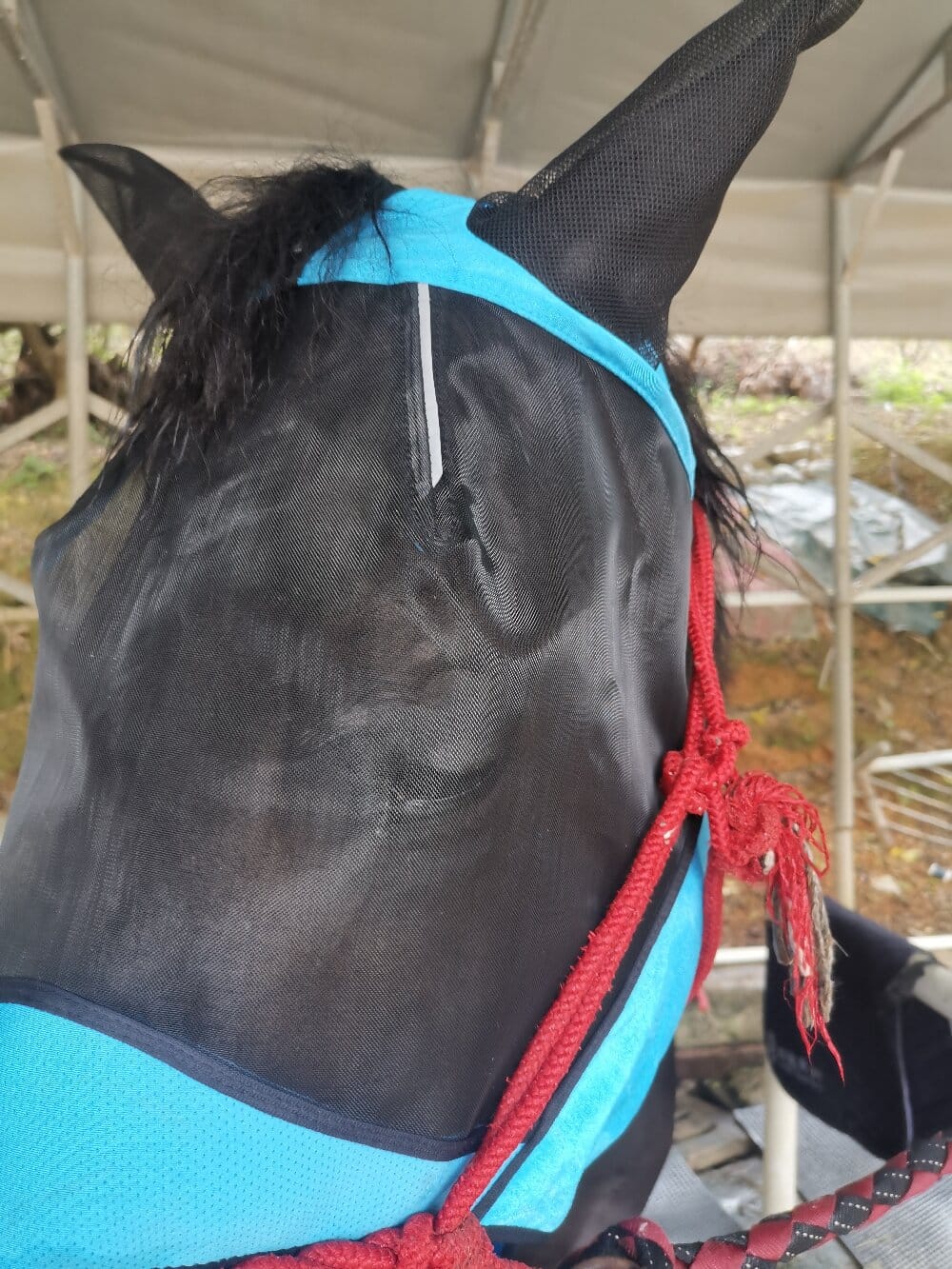
At first glance, a horse fly mask appears to be one of the simplest pieces of equestrian equipment available: a lightweight mesh covering designed to shield a horse’s eyes, ears, and face from biting insects. Yet a critical examination of how these products are designed, marketed, and used reveals a more complicated picture. Buyers are often told that any mesh face covering will solve summertime fly pressure, but that assumption deserves scrutiny. Questioning the conventional wisdom around equine insect protection can help owners make more informed decisions for their animals.
What a Horse Fly Mask Actually Does—and Does Not Do
Manufacturers frequently present these masks as a comprehensive solution to flies, gnats, and other pests. In practice, the device functions as a physical barrier, not a repellent or insecticide. It reduces direct contact with the face and eyes, which can lower irritation and the risk of insect-borne eye conditions. However, a critical perspective must acknowledge the limits of that barrier.
- Mesh density varies widely, and a loose weave may still admit tiny biting midges.
- Poorly fitted masks can rub, trap debris, or shift over the eyes, creating new welfare problems.
- No mask eliminates fly pressure on the body, legs, or underside of the jaw.
- Extended wear without cleaning can promote bacterial growth and skin irritation.
In other words, the product addresses a symptom rather than the underlying environmental conditions that attract insects in the first place.
Evaluating Fit, Materials, and Welfare Claims
Marketing language around fly masks for horses often emphasizes breathability, UV protection, and “aerodynamic” design. A skeptical buyer should ask what evidence supports these claims. Independent studies on mesh ventilation and ultraviolet blocking are limited, and much of the available information originates from manufacturers themselves. Fit remains the most reliable indicator of whether a mask will help or harm. Key considerations include:
- Clearance around the eyes so mesh does not contact the cornea.
- Adjustable straps that stay secure without overtightening.
- Ear coverage that does not compress the base of the ears or trap heat.
- Durable binding that resists fraying after repeated washing.
Owners should also question the assumption that more coverage is always better. Full-face designs may offer greater protection but can increase heat retention and friction during turnout.
Rethinking the Horse Fly Mask in a Broader Management Plan
A critical view treats the horse fly mask as one tool among many rather than a standalone fix. Integrated pest management—combining manure removal, strategic turnout timing, fans in stables, and targeted repellents—often produces better results than relying on mesh alone. Cost is another factor worth examining: premium masks command high prices, yet price does not reliably correlate with fit or durability. Trying a mask under supervision before prolonged turnout, and inspecting the face daily for rubs, remains the most practical safeguard. Buyers who ask hard questions about materials, testing, and real-world performance are better positioned to protect their horses without wasting money on overstated promises.
Conclusion
Critical thinking does not diminish the value of a horse fly mask; it clarifies it. These coverings can meaningfully reduce facial irritation when they fit well and are used as part of a wider insect-control strategy. The essential lesson is to separate marketing claims from observable performance, prioritize fit and hygiene, and remain alert to the welfare risks of prolonged or improper use. Informed skepticism, not blind acceptance, serves both the horse and the owner best.