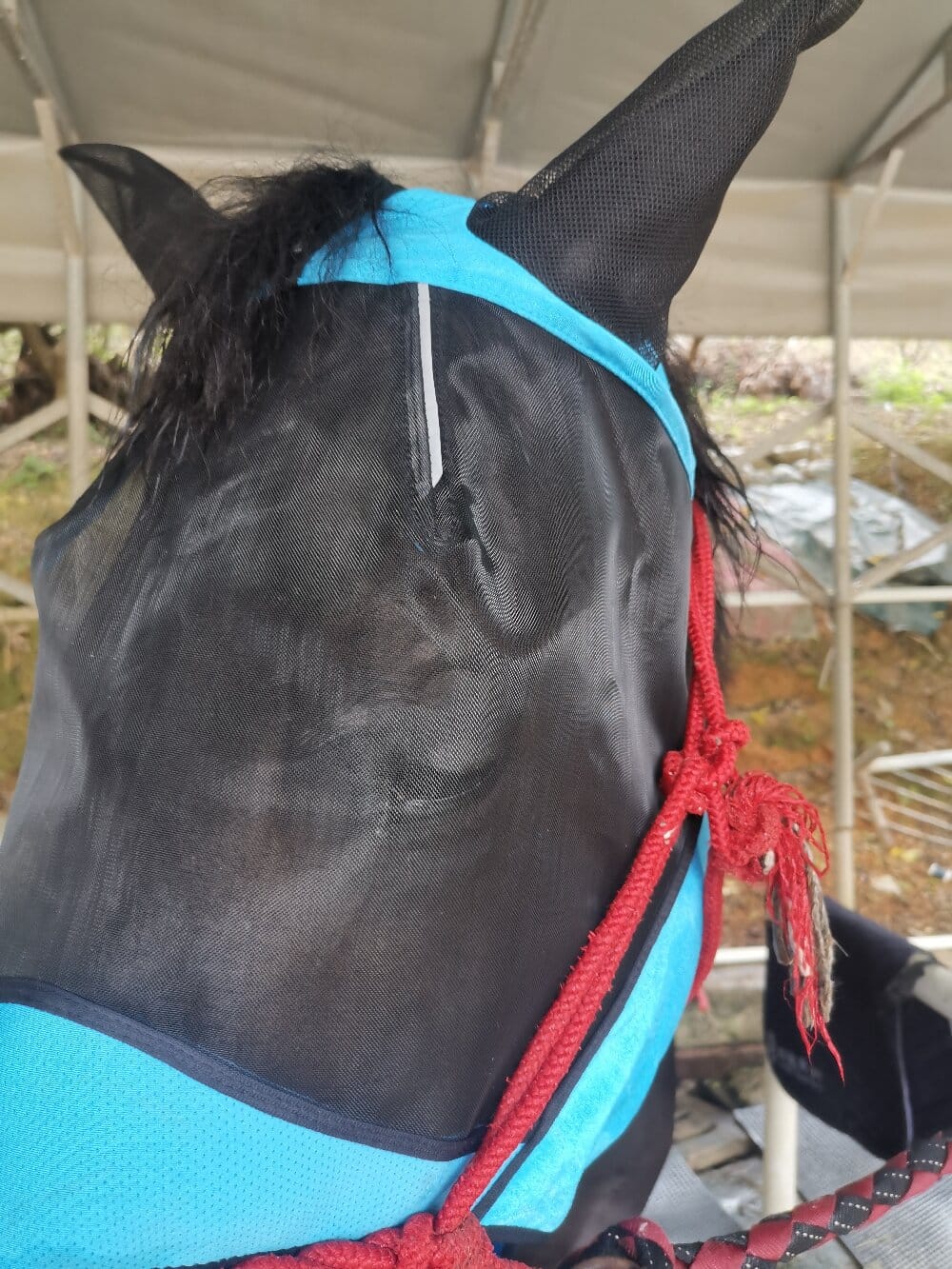
I bought my first horse fly mask three summers ago, mostly out of desperation. My mare was stomping, tossing her head, and coming in from turnout with welts around her eyes. The local tack shop had a wall of them, and I grabbed the cheapest one without thinking. That purchase kicked off a long, occasionally frustrating education in equine fly protection — and it taught me to question marketing claims, product design, and my own assumptions. A horse fly mask looks simple: mesh, straps, velcro. But once you start applying critical thinking, you realize how many variables actually matter.
What a Horse Fly Mask Actually Does — and Doesn’t Do
The core promise is straightforward: keep flies off the face and eyes. Mesh blocks insects, fine netting reduces glare, and some designs claim to filter UV rays. But here’s where I had to slow down. A mask does not repel flies; it only creates a physical barrier. If the fit is loose, flies crawl underneath. If the mesh is too coarse, tiny gnats slip through. If the fabric traps heat, you’ve traded one problem for another. I started reading labels the way I read feed tags — skeptically. “UV protection” without a stated percentage is marketing language, not a specification. I now look for actual numbers or move on.
Fit, Ventilation, and the Trade-Offs Nobody Mentions
My first cheap mask lasted two weeks before the velcro failed. The second one fit poorly and rubbed the bridge of my horse’s nose. That’s when I began comparing construction details instead of prices:
- Strap placement: Ear loops and throat straps need adjustment points; fixed straps rarely fit more than one horse well.
- Mesh density: Finer mesh blocks more insects but restricts airflow — a real concern in humid climates.
- Eye darts and seams: Raised seams over the eyes prevent rubbing, but only if they align with the horse’s actual eye position.
- Ear coverage: Removable ear covers sound convenient, but attachment points are common failure spots.
I also stopped assuming “more coverage equals better protection.” A full-face mask with ears can be excellent for turnout, yet some horses overheat or panic when their ears are covered. Observation beat speculation every time.
How I Evaluate a Horse Fly Mask Before Buying
Critical thinking changed my buying process. Now I ask three questions before spending money. First, what problem am I solving — flies at turnout, rides on the trail, or both? Second, does the design match my horse’s head shape and temperament? Third, what does the return policy look like, because fit issues are common. I also test new masks during short supervised sessions rather than turning out overnight. Reading reviews helps, but I discount extreme opinions in both directions and look for detailed, specific feedback about durability and sizing.
Practical Lessons From Three Summers of Trial and Error
Over time, I’ve settled on a rotation: a lightweight mesh mask for hot days, a sturdier one with ear protection for peak fly season, and a spare in the tack trunk because straps break at the worst moments. Washing masks regularly matters more than I expected — accumulated sweat and dirt stiffen mesh and irritate skin. I check stitching monthly and retire any mask with frayed edges near the eyes. None of this is glamorous, but it’s honest, evidence-based horsemanship.
Final Thoughts
A horse fly mask is a small purchase with an outsized effect on comfort and eye health. My advice is to question claims, prioritize fit and ventilation, and test before committing. The best mask isn’t the most expensive or the most feature-loaded — it’s the one that stays on, breathes well, and keeps your horse from stomping through another summer.