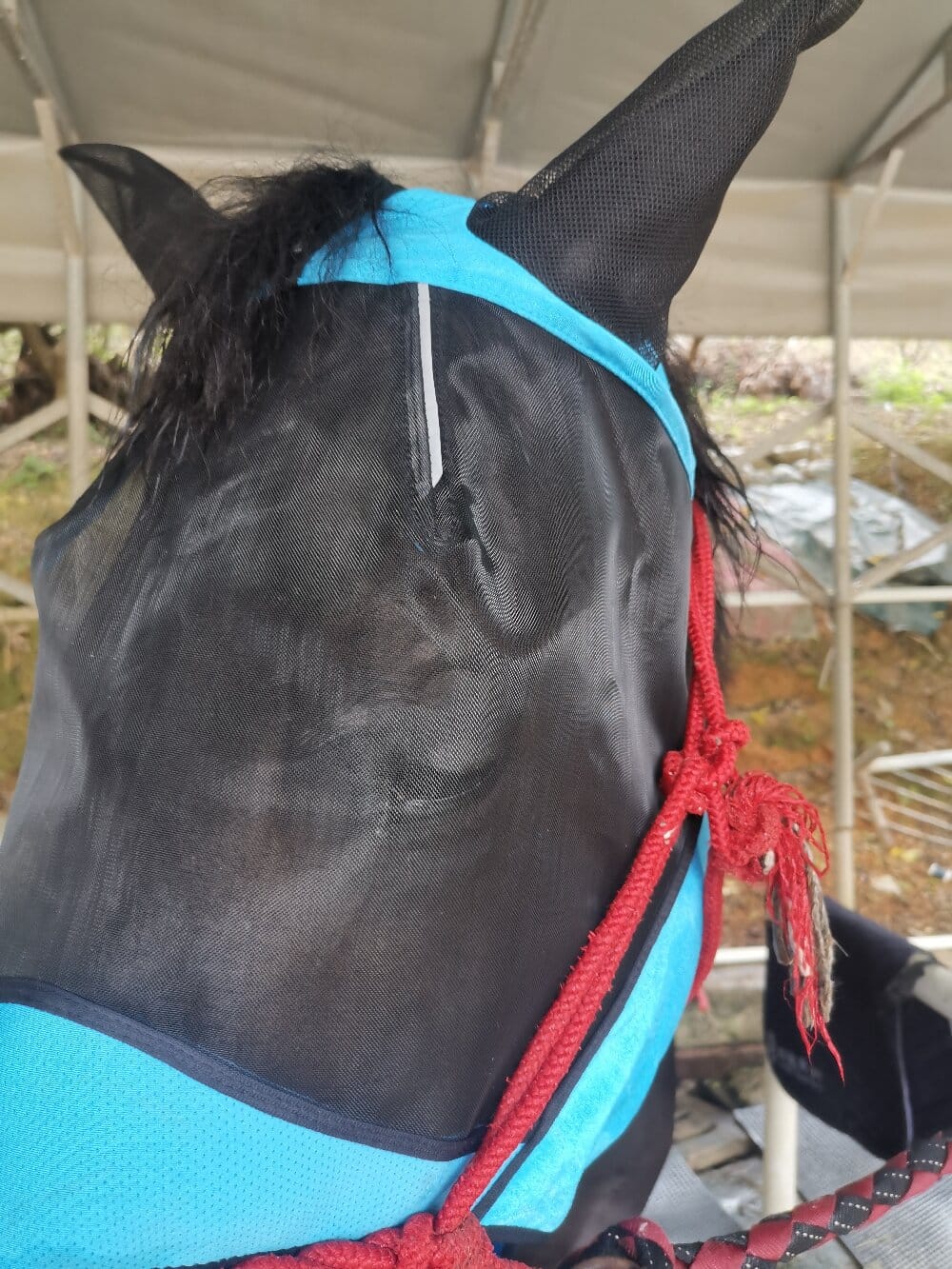
Let me be blunt: the humble horse fly mask has become one of those products that equestrians either swear by or quietly ignore, and I think it deserves a more critical look than most tack shop descriptions offer. Walk into any feed store and you will find shelves stacked with mesh hoods promising relief from flies, UV protection, and even “calming” benefits. But as someone who has watched horses rub, sweat, and outsmart every piece of gear designed for them, I cannot help asking whether we are solving a problem or simply buying peace of mind. A horse fly mask is, at its core, a piece of mesh fabric with ear holes — so why do prices range from ten dollars to over a hundred, and why do so many horses end up wearing them crooked?
What a Horse Fly Mask Actually Does (and Doesn’t Do)
Supporters point to clear benefits, and I will grant them: a well-fitted fly mask for horses can reduce irritation around the eyes, shield sensitive skin from ultraviolet rays, and keep small insects from clustering near the ears and muzzle. Veterinary sources generally agree that minimizing fly exposure supports eye health, especially for horses prone to conjunctivitis or habronema infections. That said, the marketing often outruns the evidence. Claims about “stress reduction” or “improved performance” are rarely backed by controlled studies, and mesh density varies wildly between brands. A cheap mask with poor ventilation can trap heat and debris, while a loose one invites rubbing and potential eye injury. In other words, the product is only as good as its fit and fabric — two things the packaging rarely explains.
My Critical Take on Fly Mask Design and Fit
Here is where my skepticism sharpens. Most horse fly mask designs assume a standard head shape that few horses actually have, which is why so many end up sliding down the nose or bunching behind the ears. I have seen masks rubbed off within hours, masks that fogged up around the eyes, and masks whose binding frayed after a single wash. From a critical thinking standpoint, buyers should ask three questions before purchasing:
- Does the mesh balance airflow with protection, or is it so dense that it traps moisture?
- Are the ear covers, darts, and fleece binding positioned to prevent pressure points?
- Can the closures be adjusted without creating gaps that let insects slip underneath?
Equally important is supervised introduction. Horses are masters at removing unfamiliar gear, and a mask that slips over the eye is far worse than no mask at all. I would argue that a moderately priced, well-fitted fly mask with ear protection beats a premium mask that never stays in place — a point that product reviews and marketing photos conveniently overlook.
Balancing Protection, Comfort, and Common Sense
None of this means fly masks are worthless. Used thoughtfully, they are a reasonable tool in an integrated fly control plan that includes manure management, fans, repellents, and turnout timing. My critique is aimed at the uncritical adoption of any single product as a cure-all. Owners should inspect masks daily for wear, wash them regularly to prevent skin irritation, and remove them during turnout if a horse shows signs of distress. The horse fly mask is a useful accessory, not a substitute for good barn hygiene or attentive care. Skepticism, in this case, protects both your horse and your wallet.
Final Thoughts
A horse fly mask can genuinely improve comfort for insect-sensitive horses, but only when fit, ventilation, and supervision are treated as seriously as the purchase itself. Question the hype, read the stitching before the slogans, and let your horse’s behavior — not the packaging — be the final judge.