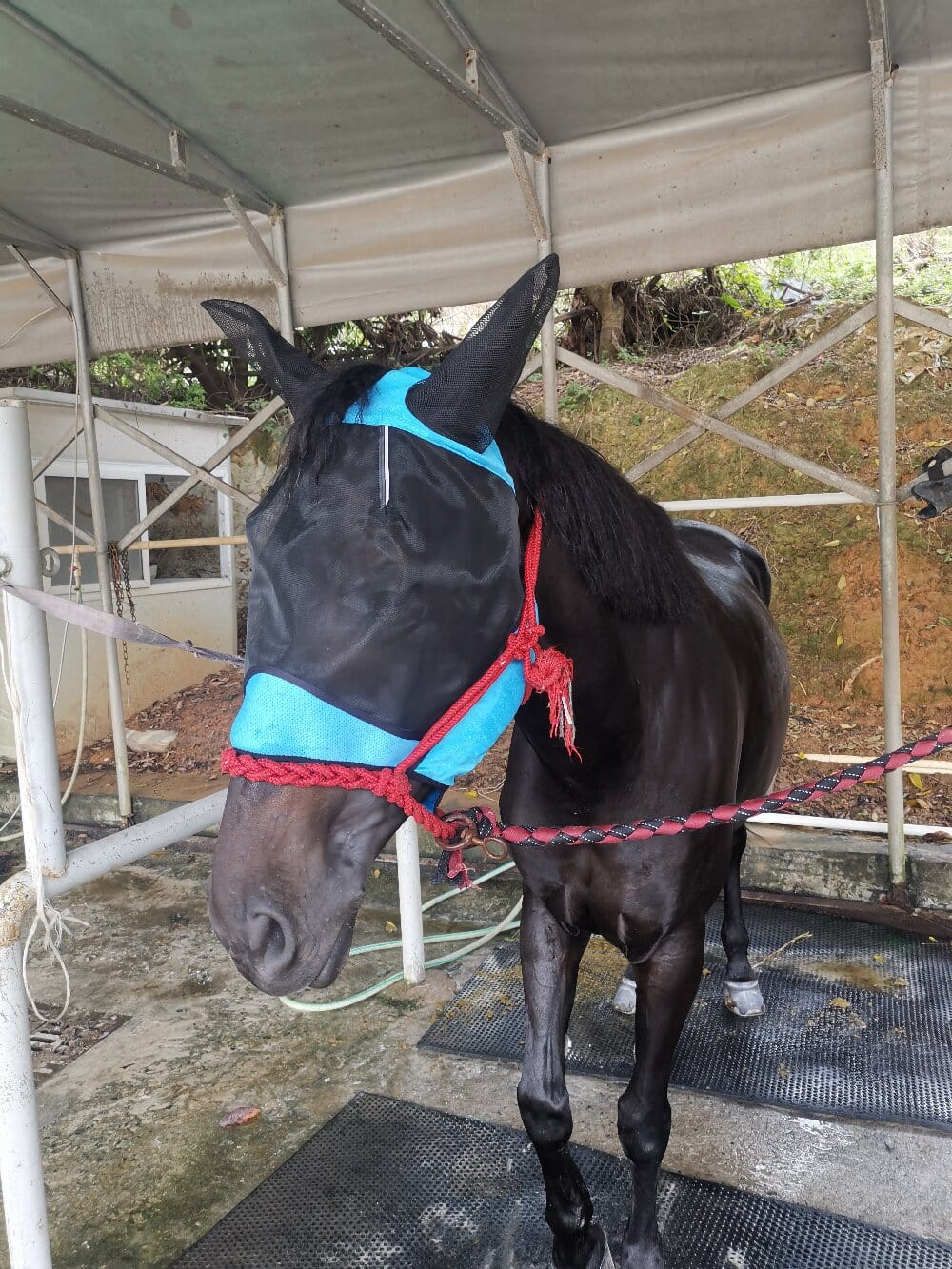
When I first saw a horse fly mask, I assumed it was one of those simple, obviously good purchases any horse owner should make. But the longer I think about it, the more I wonder whether we collectively accept these mesh hoods without asking hard questions. A horse fly mask is marketed as essential summer protection against flies, gnats, and UV rays, yet the evidence behind its everyday use deserves more scrutiny than most of us give it. Let me walk through what actually holds up under critical examination.
What a Horse Fly Mask Actually Does — and What It Doesn’t
Manufacturers claim these masks shield the eyes and face from biting insects while blocking harmful ultraviolet light. That sounds reasonable, and to some degree it is. But critical thinking demands we separate marketing from measurable outcomes. A mesh fly mask for horses may reduce fly landings around the eyes, yet it cannot eliminate the insects circling the barn. I have watched horses wearing fly masks still stomp and swish their tails in frustration, which tells me the protection is partial at best.
There is also the question of fit and comfort. A poorly fitted fly mask can rub the forehead, trap heat, or shift over the eyes, creating more irritation than it prevents. I find it telling that many horses learn to remove them using fence posts and water troughs — behavior that suggests the mask is not the effortless comfort product advertising promises.
Do the Benefits of an Equine Fly Mask Justify the Risks?
Here is where my skepticism sharpens. Every intervention carries trade-offs, and equine fly masks are no exception. Consider what we accept when we strap one on:
- Reduced peripheral vision, which can startle a nervous horse
- Trapped heat and sweat in hot, humid climates
- Potential rubbing sores along the edges and seams
- False confidence that fly control is handled, when stabling, fans, and repellents still matter
I am not arguing these masks are harmful by default. I am arguing that the burden of proof should sit with the product, not with the skeptical owner. Vet advice on insect protection often emphasizes integrated pest management — masks are one tool, not a cure-all. Treating them as a silver bullet is the kind of lazy thinking critical riders should reject.
How to Evaluate a Fly Mask for Horses Before You Buy
If you decide a mask earns a place in your tack room, choose deliberately rather than grabbing the cheapest option online. I look for breathable mesh, soft binding at the edges, adequate ear coverage where flies cluster, and a fit that leaves room around the eyes without gaping. Durability matters too — a mask that shreds in two weeks is a false economy and a hazard if loose straps snag.
Equally important is observation. Watch your horse for the first few hours of wear. Does he rub his head? Squint? Try to remove it? His behavior is more honest data than any product description.
My Concluding Take on the Horse Fly Mask
A horse fly mask can be a useful, humane addition to summer care — but only when owners think critically about fit, climate, and realistic expectations. The mask is a supplement to good barn management, not a replacement for it. Question the hype, test the product on your own horse, and let evidence rather than habit guide your choice. That, to me, is what responsible horsemanship looks like.