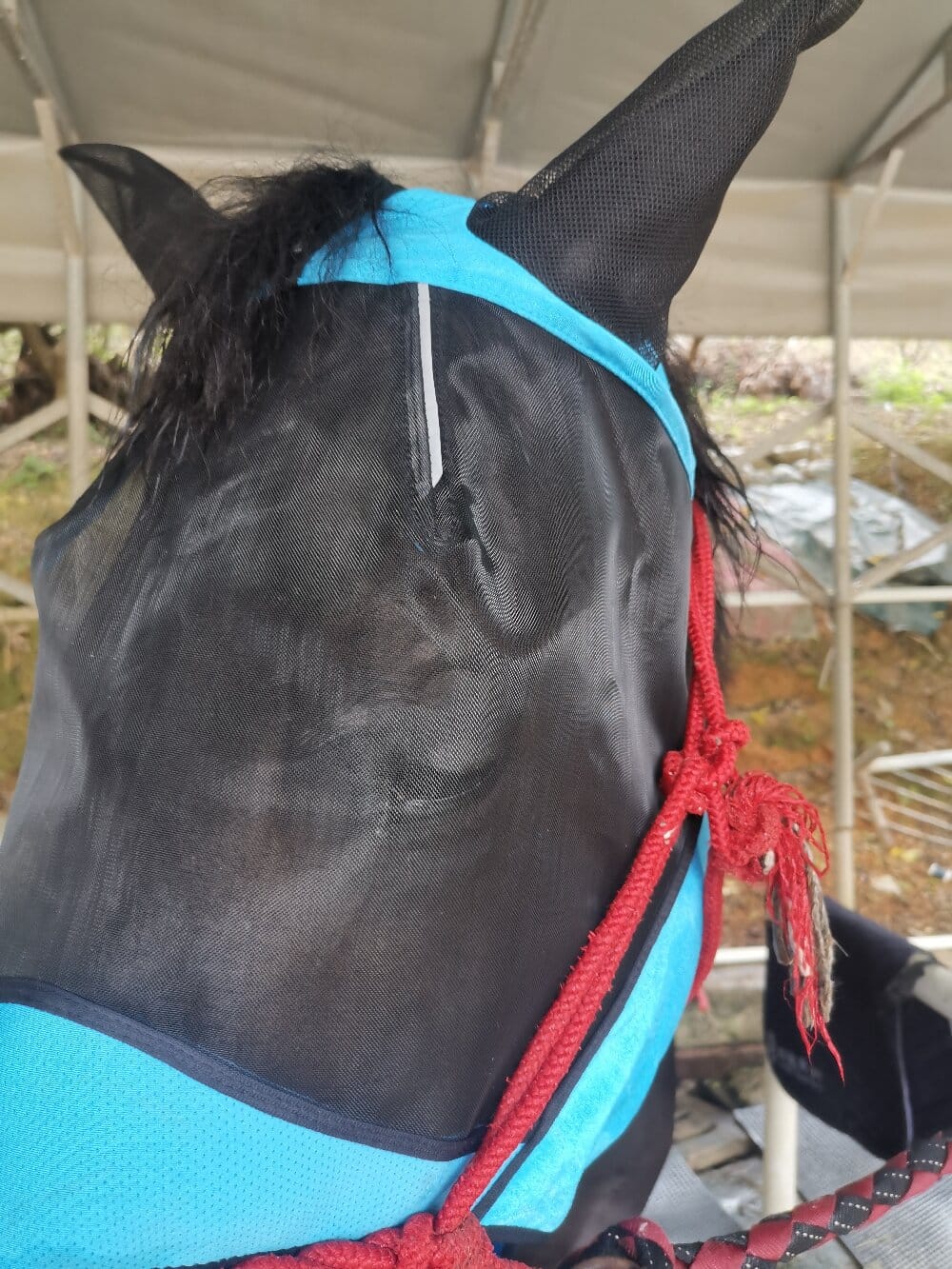
If you’ve ever watched your horse stomp, toss their head, and swish their tail nonstop during fly season, you already know the struggle. After years of battling summer pests with sprays, wipes, and homemade concoctions, I finally gave a horse fly mask a serious try — and it changed our entire routine. In this experience-based guide, I’ll walk you through what I learned, so you can decide whether a fly mask is the right investment for your horse’s comfort and health.
What a Horse Fly Mask Actually Does for Your Horse
Before I started using one, I assumed a fly mask was just a piece of mesh fabric. I was wrong. A quality mask creates a physical barrier that keeps flies, gnats, and other biting insects away from your horse’s eyes, ears, and face. Here’s what I noticed within the first week:
- Far less head tossing and eye rubbing, especially during turnout.
- Reduced tearing and irritation around the eyes.
- Fewer bites and welts on the face and ears.
- A calmer horse overall — less stress means better grazing and rest.
Beyond pest protection, the eye area stays cleaner, which helps prevent conjunctivitis and other issues that flare up in warmer months. If your horse has a pink muzzle or thin coat, the UV-blocking benefit is a bonus worth considering.
How to Choose the Right Fly Mask for Your Horse
Not all masks are created equal, and I learned this the hard way after buying a cheap one that rubbed behind the ears. Here’s what I now look for:
- Fit and adjustability: Look for adjustable straps and a mask that sits well away from the eyes without gaps at the edges.
- Breathable mesh: Fine mesh keeps out even tiny gnats while allowing airflow — important in hot climates.
- Ear coverage: If flies target the ears on your horse, choose a mask with ear covers or a separate ear bonnet.
- Durability: Reinforced stitching and quality binding matter, especially for horses turned out 24/7.
- UV protection: If your horse has sensitive skin, a mask with UV-blocking fabric adds extra defense.
Fitting Tips I Wish I’d Known Sooner
Getting the fit right is everything. Here’s my checklist from experience:
- Measure your horse’s head from the poll to the nose before ordering.
- Check that the mask doesn’t press on the eyelashes or sit too close to the eyes.
- Adjust straps so the mask stays put during rolling and grazing, but never so tight that it leaves marks.
- Inspect daily for rubbing, especially behind the ears and along the cheekbones.
- Remove it regularly for cleaning and to check the skin underneath.
I also learned to introduce the mask gradually — a few minutes at a time with a treat reward — so my horse accepted it without fuss.
Keeping Your Fly Mask in Good Shape
Maintenance is simple but essential. I rinse the mask by hand with mild soap, let it air dry completely, and rotate between two masks so there’s always a clean one ready. Check seams and straps every week; a loose strap or torn mesh can turn a protective tool into a hazard. With proper care, a good mask lasts multiple seasons.
Final Thoughts
A horse fly mask is one of the simplest, most effective tools I’ve added to my summer care routine. It reduces insect pressure, protects sensitive eyes and ears, and keeps my horse far more relaxed during turnout. Choose a well-fitted, breathable mask, check it daily, and keep it clean — your horse will thank you with a calmer attitude and healthier skin all season long.