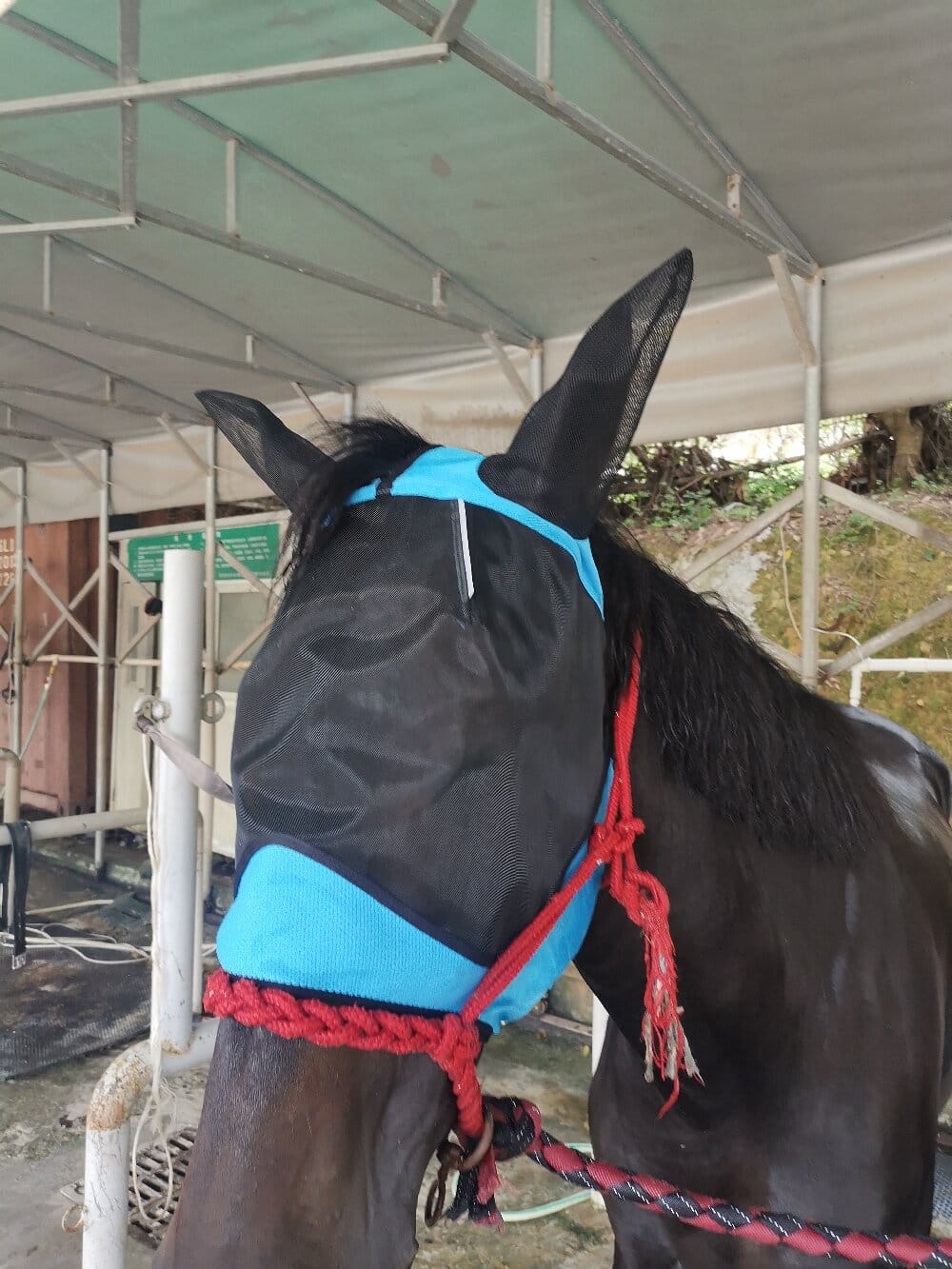
A horse fly mask is a mesh covering designed to fit over a horse’s head, ears, and sometimes the upper neck, primarily to shield the eyes and face from flying insects. Its use is widespread in equestrian care, yet a critical examination reveals that the product’s effectiveness depends heavily on context, fit, and realistic expectations. Rather than accepting marketing claims at face value, owners benefit from asking what the mask actually does, what it cannot do, and when it may cause more harm than good.
What a Horse Fly Mask Can and Cannot Do
The core function of a horse fly mask is physical exclusion. Fine mesh blocks flies, gnats, and midges from reaching sensitive areas such as the eyes and the thin skin around the muzzle. For horses prone to insect-borne eye irritation or summer sores, this barrier can reduce discomfort and lower the risk of infection. However, the mask is not a repellent; it does not chemically deter insects, and it offers no protection to the body, legs, or belly. Owners should therefore view it as one component of an integrated pest management strategy rather than a standalone solution.
Evidence for the mask’s benefits is largely practical and observational rather than derived from controlled trials. This does not make the product ineffective, but it does mean claims about preventing specific diseases should be treated cautiously. A mask may reduce exposure, but it cannot guarantee disease prevention, particularly if mesh density, fit, or coverage is inadequate.
Fit, Visibility, and Welfare Considerations When Choosing a Horse Fly Mask
Critical thinking about equine fly protection begins with fit. A poorly fitting mask can rub the face, restrict peripheral vision, or trap debris against the skin. Key considerations include:
- Mesh density: Finer mesh blocks smaller insects but may reduce airflow and visibility.
- Eye clearance: The mask should stand away from the eyes to prevent corneal abrasion.
- Ear and forelock accommodation: Designs vary; some include ear covers, which may or may not suit the individual horse.
- Fastening security: Straps must be adjustable yet breakaway-safe to reduce entanglement risk.
Welfare is a legitimate concern. Some horses tolerate masks well; others show stress through head tossing or attempts to rub them off. Observation over several days is more informative than a single fitting. Removing the mask during turnout in extreme heat or when supervised is a reasonable precaution, as mesh can impede airflow and increase local temperature.
Comparing Alternatives and Evaluating Claims
Fly masks are often marketed alongside fly sheets, repellent sprays, and feed-through supplements. A skeptical buyer should compare cost, durability, and evidence. Masks require regular cleaning and inspection for wear; damaged mesh defeats the purpose. Seasonal use, climate, and insect pressure all influence whether a mask is the most efficient choice. In low-insect environments, the benefit may be marginal; in high-pressure areas, combining masks with other controls is more defensible than relying on any single product.
Conclusion
The horse fly mask is a useful, low-tech tool for reducing facial insect exposure, but it is not a cure-all. Its value depends on correct fit, appropriate mesh selection, routine maintenance, and honest assessment of what physical barriers can achieve. Owners who apply critical thinking—observing their horse’s response, comparing alternatives, and avoiding exaggerated claims—are best positioned to use this equipment responsibly and improve equine comfort without unnecessary cost or risk.