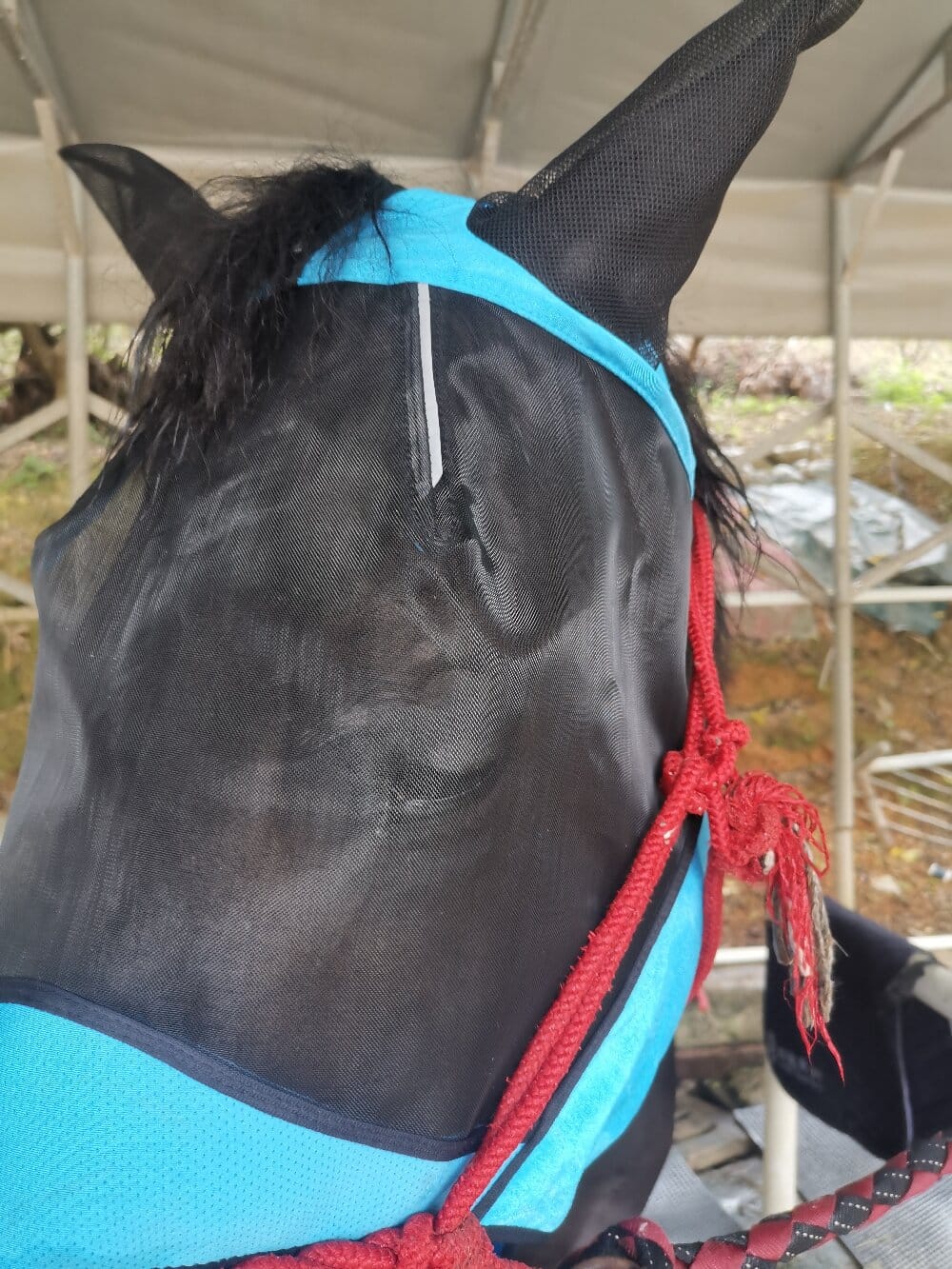

A horse fly mask is a piece of equine equipment designed to cover the animal’s face and eyes, typically made from mesh fabric, and is marketed primarily as a defense against flies, gnats, and other biting insects. While the basic concept appears straightforward, a critical examination of these products reveals a more nuanced picture involving insect control, equine vision, fit, durability, and the limits of what any face covering can realistically achieve. Buyers who look past the packaging claims will find that a fly mask is not a universal solution but one tool within a broader pest-management strategy.
What a Horse Fly Mask Can and Cannot Do
Manufacturers often describe fly masks as essential protection against flies, but the evidence supporting specific claims deserves scrutiny. A mesh face mask can physically block flies from landing on the face and eyes, and it can reduce irritation around the ears and muzzle depending on the design. However, it does not repel insects, does not reduce the fly population in the environment, and cannot protect the body, legs, or belly. Some masks are marketed with ultraviolet protection, yet the actual UV-blocking performance varies widely between products and is rarely independently verified. Critical consumers should treat marketing language about “complete protection” as aspirational rather than established fact.
Design Trade-Offs and Fit Considerations
Fit is where the practical value of a horse fly mask is most often determined. A mask that is too loose can shift, rub, or allow insects to enter through gaps; one that is too tight may cause pressure points or restrict eyelid movement. Key variables include:
- Mesh density: finer mesh blocks smaller insects but reduces airflow and visibility.
- Eye darts and shaping: proper clearance keeps fabric away from the cornea and lashes.
- Fastening systems: hook-and-loop straps are common but degrade with dirt and repeated washing.
- Ear and nose coverage: optional features that add protection but also increase fit complexity.
Because head shapes vary considerably across breeds, a mask that fits one horse well may rub another. This variability means that recommendations from other owners, while useful, are not a substitute for individual fitting and observation.
Vision, Behavior, and Welfare Questions
An often-overlooked issue is how mesh over the eyes affects equine vision. Horses have wide monocular fields and rely heavily on visual cues for spatial awareness. Depending on mesh color, weave, and cleanliness, a mask may reduce contrast or clarity, and some horses show initial resistance or spooking when first wearing one. There is also the question of supervision: a mask left on an unsupervised horse can become snagged on fencing or hooks, creating a safety risk. Responsible use generally involves checking fit daily, removing the mask during turnout in high-risk environments, and monitoring for rubs or eye irritation. These are reasonable precautions, not reasons to reject the product outright, but they do contradict the idea that a fly mask is a “set and forget” item.
Cost, Durability, and Realistic Expectations
Prices for a horse fly mask range from budget options to premium models, and higher cost does not automatically translate to better protection. Stitching quality, strap hardware, and mesh tear resistance are more meaningful indicators than brand positioning. Washing removes dirt and sweat that can abrade the mesh, but frequent washing also accelerates wear. A realistic expectation is that a mask will need replacement after a season or two of heavy use, particularly in pasture conditions.
Conclusion
A horse fly mask can be a useful, low-risk addition to an integrated insect-control plan that includes manure management, fly traps, stabling during peak insect hours, and appropriate repellents. The critical perspective is simple: evaluate masks on fit, construction, and verified function rather than marketing claims, and pair the product with active management of the horse’s environment. Used this way, a fly mask serves as a sensible supplement, not a standalone remedy.